Once you know what GSM means and what the numbers actually indicate, you will have a much clearer sense of what you are buying before it arrives at your door. This guide explains what GSM is, how it works across different fabric types, and how to use it as a practical shopping tool.
What Is GSM?
GSM stands for grams per square meter. It is a measurement of fabric weight — specifically, how many grams a one-square-meter piece of that fabric weighs. A fabric with a GSM of 150 means that a piece of it measuring one meter by one meter weighs 150 grams. A fabric with a GSM of 400 weighs 400 grams for that same area.
GSM is a universal measurement used across the entire textile industry — for cotton, linen, wool, polyester, denim, terry cloth, and everything in between. It tells you, in a single number, how dense and heavy a fabric is relative to its size. That information is genuinely useful because fabric weight has a direct relationship with how a fabric feels, how it performs, how warm it is, and how long it lasts.
You will sometimes see fabric weight expressed in ounces per square yard instead — this is more common in the United States, particularly for denim and canvas. The two units measure the same thing in different scales. A fabric weighing 150 GSM is roughly equivalent to 4.4 oz/yd².
How GSM Is Measured
Measuring GSM is straightforward. A circular cutter is used to punch out a precise circle of fabric with a known area — typically 100 square centimeters. That circle is weighed on a precision scale, and the result is mathematically scaled up to what one full square meter would weigh. The result is the GSM figure.
Manufacturers measure GSM as part of standard quality control. When a fabric is listed with a GSM number on a product page or spec sheet, it is a real, testable measurement — not an estimate or marketing language. This makes GSM one of the more reliable numbers you will encounter when shopping for fabric or fabric products.
What the Numbers Mean — GSM Ranges Explained
GSM numbers run from under 50 for the finest sheer fabrics to well over 600 for heavy industrial textiles. Most of the fabrics you encounter in everyday life fall somewhere between 100 and 500. Here is a practical breakdown of what different ranges indicate.
| GSM Range | Weight Category | What It Feels Like | Typical Uses |
|---|---|---|---|
| Below 100 | Ultra-lightweight | Sheer, delicate, almost transparent | Chiffon, organza, voile, fine lining |
| 100 — 180 | Lightweight | Thin, breathable, drapes easily | Summer shirts, blouses, light dresses |
| 180 — 250 | Medium weight | Substantial but not heavy, versatile | T-shirts, casual shirts, bed sheets |
| 250 — 350 | Medium-heavy | Noticeable weight, holds shape well | Sweatshirts, hoodies, thicker shirts |
| 350 — 500 | Heavy | Dense, warm, durable | Towels, jackets, upholstery, denim |
| 500+ | Very heavy | Thick, stiff, highly durable | Canvas, heavy denim, industrial textiles |
These ranges are a general guide. The same GSM number means different things in different fiber types — a 200 GSM wool fabric feels much warmer and heavier than a 200 GSM cotton fabric, because wool fiber is denser and traps more air. GSM tells you the weight, but the fiber type tells you the character.
GSM Across Different Fabric Categories
T-shirts and casual cotton
This is where GSM awareness pays off most immediately for everyday shoppers. Budget t-shirts are typically in the 130 to 160 GSM range — they are light, thin, and often semi-transparent when stretched. A mid-range quality t-shirt usually runs 160 to 200 GSM, with a more substantial feel and better opacity. Premium t-shirts — the kind that feel noticeably solid and hold their shape wash after wash — tend to be 200 GSM and above. When a brand advertises a "heavyweight" t-shirt, they usually mean 220 to 280 GSM. If you want a t-shirt that does not cling, does not go transparent when worn, and does not thin out after twenty washes, look for 180 GSM or higher.
Bed sheets and bedding
For cotton bed sheets, GSM is a more honest quality indicator than thread count, which is easily manipulated. A lightweight percale sheet runs around 120 to 150 GSM — cool, crisp, and breathable but with a slightly papery feel. A good quality everyday sheet falls in the 150 to 200 GSM range. Premium sheets with a more substantial, luxurious feel are typically 200 to 250 GSM. Above 250 GSM, sheets start to feel heavy and are less suited to warm weather sleeping. For most people, 180 to 220 GSM hits the sweet spot of comfort, durability, and year-round usability.
Towels
Towels are where higher GSM genuinely does mean better — within reason. A thin, fast-drying gym towel might be 300 to 400 GSM. A standard good quality bath towel is typically 450 to 550 GSM. A thick, plush, hotel-style towel runs 600 to 700 GSM and above. The higher the GSM in a towel, the more fiber is present per square meter, which means more loops of terry cloth, more absorbency, and a softer, plusher feel. The trade-off is that very high GSM towels take longer to dry and are heavier to handle. For most home bathrooms, 500 to 600 GSM is the practical sweet spot.
Sweatshirts and fleece
Lightweight sweatshirt fleece starts around 200 to 250 GSM — suitable for mild weather layering. A standard midweight sweatshirt or hoodie is typically 280 to 350 GSM, which is the range most people associate with a classic fleece or pullover. Heavy sweatshirts and blanket-weight fleeces run 400 GSM and above. If you are buying a sweatshirt and want it to feel substantial and warm rather than thin and papery, 300 GSM is a reasonable minimum.
Denim
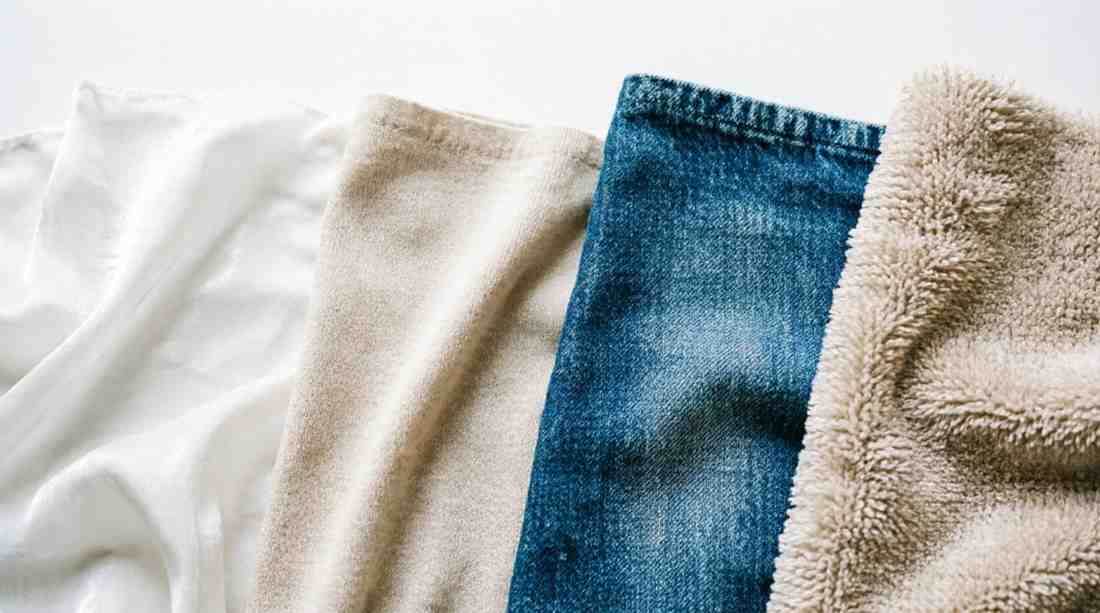
Denim weight is usually described in ounces per square yard in the US market, but the GSM equivalent is useful for comparison. Lightweight denim runs around 200 to 270 GSM (roughly 6 to 8 oz/yd²) and is used for shirts, lighter jeans, and warm weather styles. Midweight denim, the most common for everyday jeans, is roughly 270 to 370 GSM (8 to 11 oz/yd²). Heavy denim — the kind used for raw denim jeans and durable workwear — starts at 370 GSM (11 oz/yd²) and goes up from there. Heavier denim is stiffer when new but develops a distinctive fade pattern with wear that lighter denim cannot produce.
Does Higher GSM Always Mean Better Quality?
Not always — it depends entirely on what the fabric is meant to do. Higher GSM means more fiber per square meter, which translates to more weight, more warmth, more opacity, and generally more durability. For towels, winter garments, and upholstery, higher GSM is usually better. For summer shirts, bed sheets in warm climates, and athletic wear, lower GSM is often the right choice because lighter fabrics breathe better and feel more comfortable in heat.
The real value of knowing GSM is that it tells you whether a product is appropriate for its stated purpose. A 130 GSM t-shirt sold as a quality everyday shirt is not delivering what it promises. A 300 GSM bed sheet sold for hot-weather sleeping will be uncomfortably heavy. GSM helps you check the numbers against the marketing claims.
GSM vs Thread Count — Are They the Same Thing?
No, and the difference is important. Thread count measures the number of threads woven per square inch of fabric — it says something about the density of the weave. GSM measures the total weight of the fabric per square meter — it says something about how much fiber is present. A fabric can have a high thread count and a low GSM if it is woven tightly from very fine, lightweight yarn. It can have a lower thread count and a higher GSM if it is woven from thicker, heavier yarn.
For bed sheets in particular, GSM is considered a more tamper-proof quality indicator than thread count, because thread count numbers are routinely inflated through multi-ply yarn counting. GSM is harder to game — it is a direct physical measurement of the fabric's weight.
Frequently Asked Questions
What GSM is best for everyday t-shirts?
For a t-shirt that feels solid, looks opaque, and holds up well through repeated washing, look for 180 GSM or above. The 180 to 220 GSM range is the sweet spot for most people — substantial enough to feel quality but not so heavy that it becomes uncomfortable in warm weather.
What GSM should I look for in bath towels?
For a good balance of absorbency, softness, and reasonable drying time, look for towels in the 500 to 600 GSM range. Below 400 GSM and the towel will feel thin. Above 700 GSM and the towel becomes very heavy and takes a long time to dry fully between uses.
Is 200 GSM good for bed sheets?
Yes — 200 GSM is a solid weight for year-round cotton bed sheets. It provides enough substance to feel quality without being too heavy for warm weather. For hot climates or hot sleepers, 150 to 180 GSM in a percale weave is a better choice for maximum breathability.
How do I find the GSM of a product I am buying?
Better quality brands and fabric sellers list GSM in the product specifications. For clothing, look at the product description or spec sheet. If it is not listed, that is sometimes a sign that the brand is not confident about the number — budget products often avoid specifying GSM precisely because the numbers would reveal how thin the fabric actually is.
Does GSM affect how fast fabric dries?
Yes. Higher GSM fabrics have more fiber and hold more water, so they take longer to dry. This is why lightweight athletic fabrics dry almost instantly while thick towels and heavy denim take much longer. For items that need to dry quickly — gym clothes, travel towels, swimwear — lower GSM is an advantage.
The Bottom Line
GSM is one of the simplest and most honest numbers in the textile world. It tells you exactly how much fabric you are getting per unit area — no inflated counting methods, no marketing tricks, just weight. Once you understand what the numbers mean for each product category, it becomes a reliable filter for separating genuinely quality products from thin, lightweight versions dressed up with premium pricing.
The rule of thumb is straightforward: match the GSM to the purpose. Lightweight fabrics for warm weather and breathability. Heavier fabrics for warmth, structure, durability, and absorbency. And when a product does not list its GSM at all, that absence of information is often information in itself.