What Is the Bias?
Every woven fabric has three grain directions — and understanding all three helps you understand the bias.
The lengthwise grain runs parallel to the selvedge, along the warp threads. This direction has the least stretch and the most stability. Most garment pieces are cut on the lengthwise grain because it holds its shape reliably.
The crosswise grain runs perpendicular to the selvedge, along the weft threads. This direction has slightly more give than the lengthwise grain but is still relatively stable.
The bias is any diagonal direction across the fabric. The true bias — also called the straight bias — runs at exactly 45 degrees to both the lengthwise and crosswise grain. This is the direction of maximum stretch in any woven fabric, and it is what people mean when they say a garment is cut on the bias.
Because the bias runs diagonally across the warp and weft threads rather than along either set, it is not constrained by the interlacing structure the way the grain directions are. The threads can shift and move relative to each other, which gives bias-cut fabric its characteristic stretch and drape.
Why Cut on the Bias?
Cutting fabric on the bias changes its behavior completely. A piece of fabric that is stiff and stable on the grain becomes stretchy, fluid, and body-conforming when cut at 45 degrees. Designers and sewers use this for several specific reasons.
Drape and flow
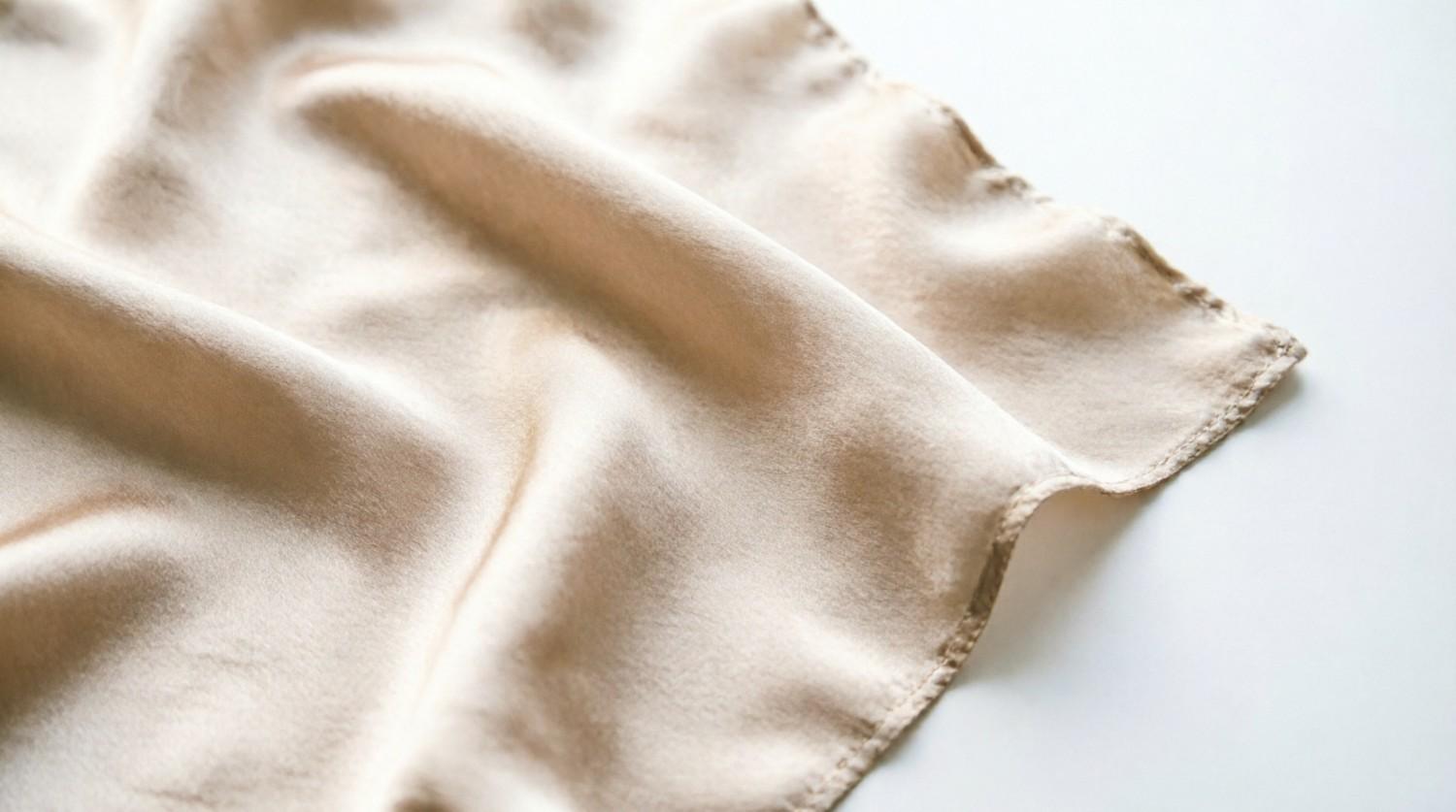
Bias-cut fabric drapes differently from grain-cut fabric. Instead of hanging away from the body, it falls close and follows the body's contours. This is why bias-cut garments — particularly skirts and dresses — have that distinctive fluid, flowing quality that grain-cut versions of the same fabric cannot replicate. The fabric moves with the wearer rather than hanging independently.
Stretch without elastane
Before spandex and elastane were invented, cutting on the bias was one of the only ways to get stretch into a woven fabric garment. A bias-cut skirt gives enough at the hips to allow movement even in fabric with zero elastic content. Bias-cut collars and necklines curve smoothly around the neck without pulling. Bias binding — strips of fabric cut on the bias — stretches to follow curved edges cleanly without puckering.
Fit and silhouette
Because bias fabric clings to and follows body curves, it creates a very different silhouette from grain-cut garments. Bias-cut dresses from the 1930s — when the technique was at its height of fashion — are famous for revealing and celebrating the natural curves of the body in a way that structured, grain-cut clothing of the era did not. The technique never fully went out of use because the results are simply not achievable any other way.
Where Bias Cutting Is Used
| Application | Why Bias Is Used |
|---|---|
| Bias-cut dresses and skirts | Fluid drape and body-following silhouette |
| Bias binding | Stretches to follow curved edges without puckering |
| Bias-cut collars | Curves smoothly around the neckline |
| Lingerie and slip dresses | Moves with the body, minimal structure needed |
| Decorative piping and trim | Flexibility to follow seams and curves cleanly |
The Challenges of Cutting on the Bias
Bias cutting produces beautiful results but it is genuinely more difficult to work with than cutting on the grain. Anyone planning to cut on the bias should know what to expect.
Fabric stretches during cutting and sewing
Because bias fabric stretches so easily, it can distort during the cutting process if not handled carefully. It needs to be laid flat without any tension, and cut pieces should be handled gently to avoid stretching them out of shape before they are sewn. Many experienced sewers let bias-cut pieces rest — laid flat for several hours or overnight — before sewing, to allow any stretch from handling to relax out.
Seams can stretch and wave
Sewing bias seams requires more care than sewing grain seams. The fabric wants to stretch as it goes through the machine, which can cause the finished seam to wave or pucker. Sewing with a slightly looser tension, using a walking foot, and not pulling the fabric through the machine helps keep bias seams flat and even.
More fabric is required
Cutting at 45 degrees across the fabric is less efficient than cutting on the grain. Pattern pieces need to be rotated and laid diagonally, which means more of the fabric around them is wasted. A garment that requires two yards of fabric cut on the grain may require three yards cut on the bias. This is one reason bias-cut garments are more expensive to produce.
Hemming is trickier
Bias-cut hems need extra time. The hem edge stretches unevenly and needs to hang before being trimmed and finished, or the finished hem will be uneven. Most experienced sewers hang bias-cut garments overnight after construction and before hemming so the fabric can drop to its natural position.
Frequently Asked Questions
Does all fabric behave the same on the bias?
No. Lightweight, fluid fabrics like silk, rayon, and chiffon drape beautifully on the bias. Heavier, stiffer fabrics like denim or canvas do not drape as well and are rarely cut on the bias for that reason. The bias works best with fabrics that have natural drape and flow.
What is bias tape and how is it different from regular fabric strips?
Bias tape is a strip of fabric cut on the bias and folded for use as binding or trim. Because it is cut on the bias, it stretches to follow curves — which regular grain-cut strips cannot do without puckering. It is used to finish curved necklines, armholes, and hems cleanly.
How do I find the true bias on a piece of fabric?
Fold the fabric so the selvedge edge aligns with the crosswise cut edge. The fold line that results runs at exactly 45 degrees to both grain directions — that fold line is the true bias. You can mark it with tailor's chalk and use it as a reference for cutting.
The Bottom Line
The bias is where woven fabric finds its most expressive quality — stretch, drape, and a body-following fluidity that no other cutting direction can produce. It requires more care, more fabric, and more skill to work with than cutting on the grain, but the results justify the effort. Once you understand what the bias is and what it does, you start seeing it in garments everywhere — and you understand why certain dresses move the way they do.