This guide explains exactly that — what yarn is, how it is made from fiber, the different types that exist, and why any of it matters when it comes to understanding the fabrics in your everyday life.
What Is Yarn?
Yarn is a continuous strand of twisted or interlocked fibers used to make fabric through weaving or knitting. It is the intermediate product between raw fiber and finished cloth. In simple terms — fiber is the raw material, yarn is what you make from fiber, and fabric is what you make from yarn.
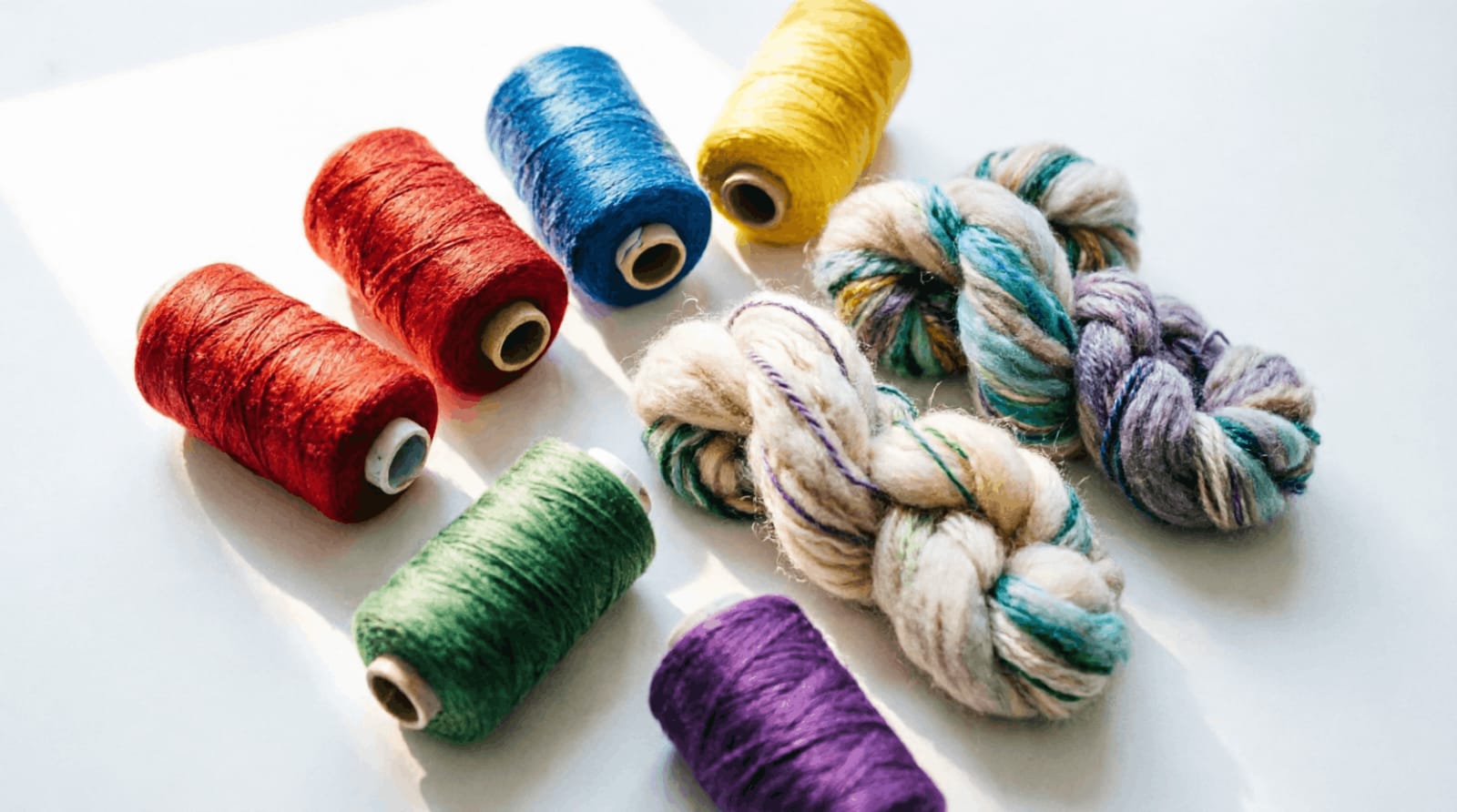
Yarn can be made from almost any fiber — cotton, wool, silk, polyester, nylon, linen, acrylic, or blends of multiple fibers. The fiber it is made from, the way it is spun, and how tightly it is twisted all affect the properties of the final fabric.
Thread is a type of yarn, but the two words are not interchangeable in practice. Thread is typically finer and more tightly twisted, made specifically for sewing pieces of fabric together. Yarn is thicker and used for constructing fabric itself through weaving or knitting.
How Fiber Becomes Yarn — The Spinning Process
The process of turning fiber into yarn is called spinning. It is one of the oldest human technologies — people were spinning fiber into yarn by hand tens of thousands of years before machines existed. The principle has not changed. What has changed is the speed.
Step one — cleaning and opening
Raw natural fibers arrive dirty and tangled. Cotton comes with seed fragments and plant matter mixed in. Wool arrives with lanolin, dirt, and sometimes twigs. The first step is cleaning — washing, beating, and opening the fiber mass so that individual fibers are separated and free of debris. Synthetic fibers skip this stage entirely because they come out of the manufacturing process already clean.
Step two — carding
After cleaning, fibers go through carding — passing through rollers covered in fine wire teeth that untangle and partially align the fibers into a thin, even web called a sliver. Carding is what transforms a clump of loose fiber into something that can actually be spun. The sliver that comes out of carding looks like a soft, continuous rope of loosely aligned fiber.
Step three — combing (for finer yarns)
Higher quality yarns go through an additional step called combing after carding. Combing removes the shorter fibers and straightens the remaining long fibers into near-perfect parallel alignment. The result is a smoother, finer, stronger sliver that will produce higher quality yarn. Combed cotton is noticeably softer and smoother than carded cotton — and more expensive because of the extra processing.
Step four — drafting
Drafting is the process of drawing out the sliver — pulling it thinner and thinner while keeping the fibers aligned. This progressively reduces the thickness of the fiber bundle to close to the final yarn diameter. The sliver goes through multiple sets of rollers running at progressively higher speeds, each set pulling the fiber bundle thinner than the last.
Step five — twisting
Twisting is where yarn actually becomes yarn. The drafted fiber bundle is twisted — either clockwise or counterclockwise — which causes the individual fibers to grip each other and form a cohesive, strong strand. Without twist, the fibers would simply fall apart. The amount of twist applied determines how strong, how smooth, and how soft the finished yarn will be.
A high twist produces a strong, firm yarn with a smooth surface. A low twist produces a softer, fluffier yarn with more air trapped inside — which is why chunky knitting yarn feels so different from the tightly twisted yarn used in fine dress shirts.
Types of Yarn
Not all yarn is the same. Yarn varies significantly based on how it is made and what it is intended for.
| Yarn Type | Description | Common Uses |
|---|---|---|
| Spun yarn | Made by twisting staple fibers together | Cotton fabrics, wool knitwear, most everyday fabrics |
| Filament yarn | Made from long continuous fibers with minimal twist | Silk fabrics, polyester, nylon hosiery |
| Plied yarn | Two or more single yarns twisted together | Stronger fabrics, knitwear, upholstery |
| Textured yarn | Synthetic filament yarn that has been crimped or looped | Stretch fabrics, activewear, soft knitwear |
| Fancy yarn | Deliberately uneven — with loops, knots, or thick-thin variation | Decorative fabrics, craft textiles |
| Blended yarn | Made from two or more different fiber types spun together | Most modern clothing fabrics |
How Yarn Weight Affects Fabric
Yarn thickness — called yarn count or yarn weight — has a direct effect on how the finished fabric looks and feels. Fine yarns produce lightweight, smooth fabrics. Thick yarns produce heavier, more textured fabrics.
Yarn count is measured differently depending on the fiber type and country, which makes it one of the more confusing parts of textile terminology. But the basic principle is simple: the higher the yarn count number on cotton and linen, the finer the yarn. A 200-thread-count sheet uses much finer yarn than a 100-thread-count sheet, which is part of why it feels softer.
For wool and knitting yarns, weight is described differently — lace, fingering, sport, worsted, bulky — but the principle is the same. Finer yarn produces lighter, smoother fabric. Thicker yarn produces heavier, warmer fabric.
Why Yarn Quality Matters
The quality of the yarn used in a fabric determines much of the quality of the final product. A fabric made from long-staple, combed cotton yarn will be noticeably softer, smoother, and more durable than one made from short-staple, carded cotton — even if both are labeled simply as "100% cotton." This is why two cotton t-shirts at very different price points can feel completely different despite apparently being made from the same fiber.
Long-staple cotton varieties like Pima and Egyptian cotton produce longer fibers that spin into finer, stronger yarn with fewer protruding ends. The result is a fabric that feels softer, pills less, and lasts longer. When you pay more for a premium cotton product, you are largely paying for better fiber that produces better yarn.
Frequently Asked Questions
Is yarn the same as thread?
They are both made from twisted fiber, but they serve different purposes. Yarn is used to construct fabric through weaving and knitting. Thread is finer, more tightly twisted, and used specifically for sewing pieces of fabric together. All thread is a type of yarn, but not all yarn is thread.
What is the difference between yarn and string?
Yarn is made from textile fibers and is used for making fabric or crafts. String and rope are also twisted fiber structures but are typically made from coarser fibers and engineered for strength rather than softness or fabric construction.
Does the direction of twist matter in yarn?
Yes. Yarn can be twisted clockwise, called Z-twist, or counterclockwise, called S-twist. When multiple yarns are plied together, they are usually twisted in the opposite direction from the individual yarns, which locks the structure together and adds strength. Most weavers and knitters never need to think about this, but it matters significantly in technical and specialty textiles.
Why does yarn pill?
Pilling happens when short fiber ends on the yarn surface tangle together into small balls due to friction during wear or washing. Fabrics made from short-staple fibers or loosely twisted yarns pill more easily because there are more fiber ends exposed at the surface. Higher quality, tighter-twisted yarn from longer fibers pills significantly less.
The Bottom Line
Yarn is the link between raw fiber and finished fabric — the step that makes weaving and knitting possible. The type of fiber used, how it is prepared, how tightly it is twisted, and how fine or thick the final strand is all flow directly into the properties of the fabric made from it. Understanding yarn does not require any technical expertise. It just requires paying attention to the fact that the softness of your favorite shirt and the warmth of your best sweater started with decisions made at the spinning stage — long before the fabric was ever woven.