This guide explains what knitted fabric is, how machines produce it at scale, what jersey fabric specifically is, and why knitted fabrics behave the way they do compared to woven ones.
What Is Knitted Fabric?
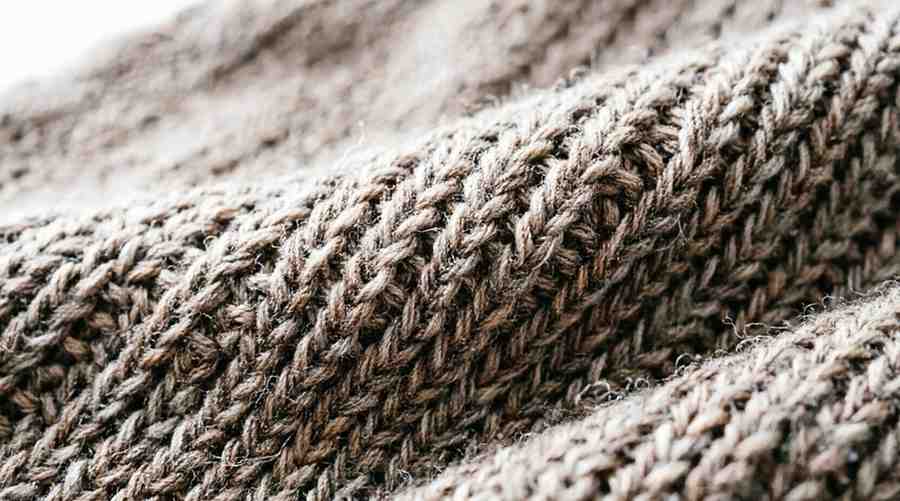
Knitted fabric is made by forming yarn into a series of interlocking loops. Unlike woven fabric — where two separate sets of yarn cross each other at right angles — knitted fabric is built from a single continuous yarn that forms loops, with each loop connected to the ones next to it and above and below it.
That loop structure is what gives knitted fabric its defining characteristic: stretch. Because the loops can expand and contract, knitted fabric stretches easily in multiple directions and then returns to its original shape. This is why a t-shirt moves with your body when you raise your arms, while a woven dress shirt pulls and resists.
Hand knitting and machine knitting follow the same basic principle — they just operate at very different speeds. An experienced hand knitter might complete a few centimeters of fabric per hour. An industrial knitting machine can produce meters of fabric per minute.
How Machine Knitting Works
Industrial knitting machines use a bed of hooked needles — sometimes hundreds of them arranged in a row or in a cylinder — to form loops from yarn at high speed. Each needle catches the yarn, pulls it through the previous loop to form a new one, and then passes that new loop to the next needle in sequence. This happens simultaneously across the entire width of the fabric, which is how large flat sheets of knitted fabric are produced so quickly.
There are two main types of industrial knitting machines, and they produce fundamentally different types of fabric.
Weft knitting machines
Weft knitting machines feed yarn horizontally across the needle bed, forming loops row by row across the width of the fabric. This is the most common type of machine knitting and produces the fabrics most people are familiar with — jersey, interlock, rib knit, and most t-shirt and underwear fabrics. Weft knitted fabrics stretch most easily in the horizontal direction and have moderate stretch in the vertical direction.
Warp knitting machines
Warp knitting machines feed multiple yarns vertically and simultaneously, with each needle working its own separate yarn while the yarns interloop with their neighbors. Warp knitted fabrics are more stable and less stretchy than weft knitted fabrics. Tricot, mesh fabrics, and many lace fabrics are warp knitted. A lot of athletic fabric and swimwear linings are also warp knitted because the reduced stretch in all directions provides more support and structure.
What Is Jersey Fabric?
Jersey is the most common knitted fabric in the world. It is what the vast majority of t-shirts, casual tops, and lightweight knit garments are made from. If you own a plain cotton t-shirt, you own jersey fabric.
Jersey is produced on a weft knitting machine using a single set of needles. The result is a fabric with a smooth, flat surface on one side — the face — and a slightly textured surface of interlocking loops on the other side — the back. If you look at the inside of a t-shirt, you can see those loops clearly.
Jersey fabric has good horizontal stretch, moderate vertical stretch, and a natural tendency to curl at the edges when cut — which is why sewing with jersey requires slightly different techniques than sewing with woven fabric. It does not fray at cut edges the way woven fabric does, which is one advantage for garment construction.
Jersey can be made from almost any fiber — cotton jersey, polyester jersey, rayon jersey, bamboo jersey, and blended jerseys are all common. The fiber determines how the finished fabric feels and performs. Cotton jersey breathes and absorbs moisture. Polyester jersey dries quickly and holds its shape. Rayon jersey drapes beautifully but is less durable.
Common Types of Knitted Fabric
| Fabric | Structure | Key Properties | Common Uses |
|---|---|---|---|
| Single jersey | Single needle bed, basic loop structure | Lightweight, stretchy, curls at edges | T-shirts, casual tops, underwear |
| Double jersey / Interlock | Two needle beds knitted together | Thicker, stable, does not curl | Polo shirts, dresses, children's clothing |
| Rib knit | Alternating knit and purl columns | High stretch, recovers well, textured surface | Cuffs, collars, waistbands, fitted tops |
| French terry | Loops on one side, smooth on other | Absorbent, soft, medium weight | Sweatshirts, loungewear, baby clothing |
| Fleece | Knitted base with brushed surface | Warm, soft, lightweight insulation | Sweatshirts, jackets, blankets |
| Tricot | Warp knitted, fine and stable | Smooth, low stretch, does not run | Lingerie, swimwear lining, activewear |
Knitted vs Woven Fabric — The Key Differences
Understanding the difference between knitted and woven fabric is one of the most practically useful things you can know about textiles. The two types behave very differently in use, in care, and in sewing.
| Factor | Knitted Fabric | Woven Fabric |
|---|---|---|
| Stretch | Stretches in multiple directions | Minimal stretch |
| Structure | Loops — flexible and elastic | Interlaced threads — firm and stable |
| Fraying | Does not fray when cut | Frays at cut edges |
| Wrinkles | Resists wrinkles naturally | Wrinkles more easily |
| Sewing | Requires stretch stitches or serger | Standard straight stitch works fine |
| Typical uses | T-shirts, knitwear, activewear, underwear | Shirts, jeans, suits, home textiles |
Why Knitted Fabrics Pill
One complaint people have about knitted fabrics — particularly jersey and fleece — is pilling. Those small fuzzy balls that form on the surface of a fabric after repeated wear and washing are more common on knitted fabrics than woven ones, and there is a specific reason for it.
In a knitted fabric, the loops sit at the surface and the fiber ends within those loops are relatively free to work their way out with friction. Once loose fiber ends emerge from the loop structure, they tangle with other loose ends and form pills. Fabrics made from shorter fibers pill faster than those made from longer fibers. Loosely knitted fabrics pill faster than tightly knitted ones. Higher quality yarn with longer fibers and tighter twist pills significantly less — which is one of the clearest differences between a cheap t-shirt and an expensive one made from the same fiber type.
Frequently Asked Questions
Is all stretchy fabric knitted?
Not always. Woven fabrics can have stretch if they contain spandex or elastane fibers blended in. But most naturally stretchy fabrics — t-shirts, leggings, underwear — are knitted. The stretch in knitted fabric comes from its loop structure, not from the fiber itself.
Why does jersey curl at the edges when cut?
Single jersey curls because the loops on the face and back of the fabric are under different tensions. When cut, the edge tries to relieve that tension by curling toward the face side. Double jersey and interlock do not curl because their two-layer structure balances the tension on both sides.
Can knitted fabric be ironed?
Yes, but carefully. Most knitted fabrics — especially those made from synthetic fibers — should be pressed with a low heat setting and ideally with a pressing cloth between the iron and the fabric. High heat can damage the loop structure and cause synthetic knits to melt or distort permanently.
What is the difference between jersey and interlock?
Jersey is a single-layer knit with one smooth side and one looped side. Interlock is a double-layer knit — two layers of jersey knitted together simultaneously — which produces a thicker, more stable fabric that looks the same on both sides and does not curl at the edges.
The Bottom Line
Knitted fabric is everywhere in modern clothing, and jersey is its most common form. The loop structure that defines all knitted fabric is what gives it stretch, comfort, and wrinkle resistance — the properties that make it the default choice for casual wear, activewear, and anything designed to move with the body. Understanding how it is made and how it differs from woven fabric gives you a clear framework for choosing the right material for any purpose and caring for what you already own.