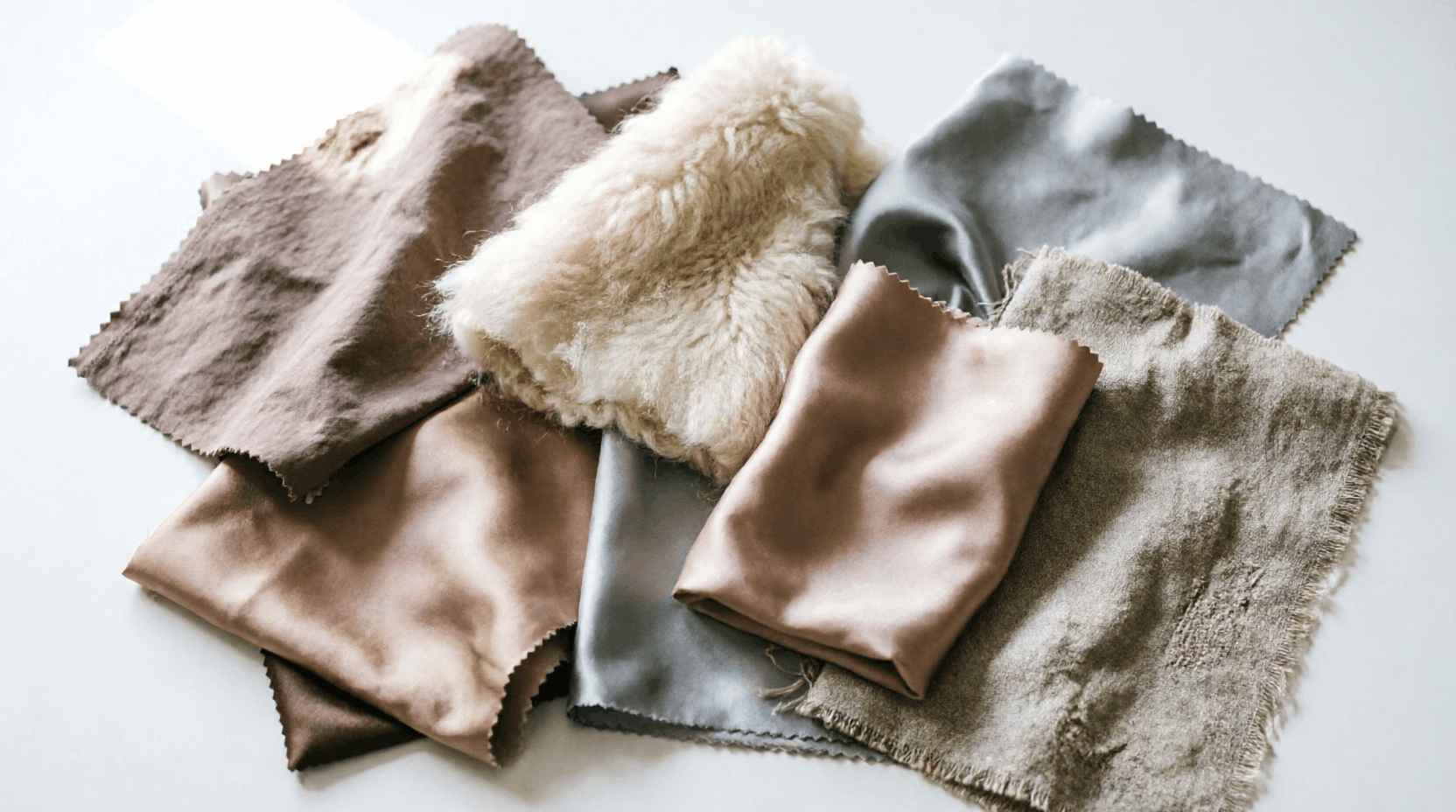
That is what this guide is for. By the end of it, you will know exactly what textiles are, where they come from, how they are made, what the different types are, and why any of this matters in everyday life. No background knowledge required — just start reading.
What Is a Textile?
A textile is any material made from fibers or yarns that have been interlaced, knitted, bonded, or felted together to form a flexible sheet or structure. In plain language — a textile is any material that starts as a fiber and ends up as something you can touch, wear, sit on, or use.
The word textile comes from the Latin word texere, which means to weave. That origin makes sense because weaving — interlacing threads at right angles — is one of the oldest and most common ways humans have created fabric. But today, textiles are made through many different methods, not just weaving.
The simplest way to think about it: if it is made from fiber, it is a textile. Your t-shirt is a textile. Your sofa cushion is a textile. The rope in your garage is a textile. The bandage at a hospital is a textile. They all start from the same basic idea — fiber turned into something useful.
Textile vs Fabric — What Is the Difference?
These two words get used interchangeably all the time, including by people who work in the industry. But they are not exactly the same thing, and understanding the difference helps you think more clearly about the whole subject.
Textile is the broad category. It includes raw fibers, spun yarns, finished flat materials, and the final products made from all of those things. Fabric is more specific — it refers to the finished flat material that has already been woven, knitted, or otherwise constructed from yarn or fiber.
So fabric is one type of textile. A ball of yarn is a textile but not a fabric. A woven piece of cotton cloth is both a textile and a fabric. A finished shirt is a textile product but not a fabric in the strict sense.
In everyday conversation, most people use the two words to mean the same thing, and that is completely fine. But when you are learning about the subject seriously, it helps to know the distinction.
A Brief History of Textiles
Textiles are not a modern invention. They are one of the oldest crafts in human history — older than most people realize.
Archaeological evidence suggests that humans were using plant fibers to make cordage and basic textiles at least 30,000 years ago. Ancient Egyptians were weaving fine linen as far back as 5,000 BC. China developed silk production around 2700 BC and protected the secret of how it was made for centuries. Wool has been spun and woven across cultures from ancient Mesopotamia to the Andes.
For most of human history, making textile was slow, labor-intensive work done entirely by hand. That changed dramatically during the Industrial Revolution in the 18th and 19th centuries, when mechanical looms and spinning machines transformed textile production from a cottage craft into a global industry. Fabric that once took weeks to produce could suddenly be made in hours.
The 20th century brought another revolution — synthetic fibers. Nylon was invented in 1935. Polyester followed in the 1940s. These man-made materials were cheaper, more durable, and easier to produce at scale than natural fibers, and they permanently changed what clothing and textiles could do. Today, synthetic fibers make up more than 60 percent of all textile production worldwide.
How Is Textile Made?
The process of making a textile — from raw material to finished product — involves several distinct stages. Understanding these stages helps you understand why different fabrics behave the way they do.
- Fiber production — Everything starts with a fiber. Natural fibers like cotton are harvested from plants. Wool is sheared from sheep. Silk is unwound from silkworm cocoons. Synthetic fibers like polyester are produced through chemical reactions in a factory, extruded as fine filaments through tiny holes called spinnerets.
- Spinning — Raw fibers are cleaned, straightened, and then twisted together to form yarn or thread. This twisting gives the yarn strength. The tightness of the twist affects the texture and feel of the final fabric.
- Fabric construction — The yarn is formed into a flat sheet through weaving, knitting, or other methods. Weaving interlaces two sets of yarn at right angles. Knitting loops yarn together in interconnected rows. Nonwoven fabrics are made by bonding or felting fibers together without any yarn at all.
- Dyeing and finishing — The raw fabric is washed, dyed or printed with color, and treated with chemicals to give it specific properties — softness, wrinkle resistance, water repellency, shrink resistance. This finishing stage is what gives many fabrics their final look and feel.
- Cutting and construction — The finished fabric is cut into pieces and sewn or bonded together to make the final product, whether that is a shirt, a curtain, a medical bandage, or an industrial filter.
The Three Main Types of Textiles
Textiles are categorized based on where their fibers come from. There are three main types.
Natural Textiles
Natural textiles come from plants or animals. They are the oldest type of textile and are still widely used today because of their comfort, breathability, and feel against skin.
| Textile | Source | Common Uses |
|---|---|---|
| Cotton | Cotton plant | T-shirts, jeans, bedsheets, towels |
| Linen | Flax plant | Summer clothing, tablecloths, napkins |
| Wool | Sheep | Sweaters, coats, blankets, carpets |
| Silk | Silkworm | Luxury clothing, scarves, bedding |
| Hemp | Hemp plant | Rope, bags, eco-friendly clothing |
| Cashmere | Cashmere goat | Luxury knitwear, scarves |
Synthetic Textiles
Synthetic textiles are entirely man-made, created through chemical processes using petroleum-based materials. They did not exist before the 20th century, but today they dominate global textile production. They are cheaper, stronger, and more resistant to wear than most natural fibers — but they are not biodegradable and have significant environmental impact.
| Textile | Made From | Common Uses |
|---|---|---|
| Polyester | Petroleum chemicals | Activewear, outerwear, home furnishings |
| Nylon | Chemical synthesis | Hosiery, bags, ropes, sportswear |
| Acrylic | Synthetic polymer | Knitwear, blankets, carpets |
| Spandex / Lycra | Polyurethane | Sportswear, swimwear, leggings |
| Polyamide | Chemical synthesis | Swimwear, lingerie, sportswear |
Semi-Synthetic Textiles
Semi-synthetic textiles sit in between. They start from natural raw materials — usually wood pulp or plant cellulose — but go through significant chemical processing to become a usable fiber. They often feel natural but are not entirely natural in how they are produced.
Rayon, modal, lyocell, and acetate are the most common semi-synthetic textiles. Bamboo fabric, despite being marketed as natural, is almost always processed using the same chemical methods as rayon and falls into this category.
What Are Textiles Used For?
Most people associate textiles with clothing, and clothing is certainly the largest single use. But the full range of textile applications is far wider than most people realize.
| Category | Examples |
|---|---|
| Apparel | Shirts, pants, dresses, underwear, socks, coats |
| Home Textiles | Bedsheets, curtains, towels, rugs, upholstery, cushions |
| Medical Textiles | Bandages, surgical sutures, implants, compression garments |
| Technical Textiles | Airbags, bulletproof vests, parachutes, seatbelts, fire suits |
| Industrial Textiles | Conveyor belts, filtration fabrics, geotextiles, tarpaulins |
| Art and Craft | Embroidery, quilting, tapestry, weaving art |
The technical textile sector is particularly underappreciated. The seatbelt that keeps you safe in a car is a textile. The surgical sutures a doctor uses are textile. The heat-resistant panels on aircraft are textile. The filter in your water purifier is very likely a textile. Once you start looking, they are everywhere.
Why Does Understanding Textiles Actually Matter?
You might be thinking — this is interesting, but why do I actually need to know this? The honest answer is that understanding textiles makes you better at a surprising number of everyday things.
When you know your fabrics, you buy better. You stop reaching for the cheapest option and start understanding why a linen shirt costs more than a polyester one and whether that difference is worth it for you. You understand what "100% cotton" means on a label versus "cotton blend" and why the two behave completely differently after washing.
You care for your clothes better. Most laundry mistakes happen because people treat all fabrics the same way. Washing wool in hot water. Putting silk in the dryer. Ironing synthetic fabric on high heat. Knowing what your textiles are made of tells you exactly how to treat them.
You make smarter choices for your home. Picking the wrong upholstery fabric for a couch that gets daily use from kids and pets is an expensive mistake. Understanding fabric durability, cleanability, and wear resistance helps you choose right the first time.
And if you sew, design, or work with fabric in any creative capacity — textile knowledge is simply foundational. Everything else builds on it.
Frequently Asked Questions
Is all fabric a textile?
Yes. All fabric is a type of textile. But not everything called a textile is a fabric — raw fibers, yarns, and ropes are also textiles without being fabric in the traditional sense.
What is the most common textile in the world?
Polyester is the most produced textile fiber in the world by volume, followed by cotton. Together they account for the majority of all textile production globally.
What makes a textile sustainable?
A truly sustainable textile has low environmental impact across its entire lifecycle — from how the fiber is grown or made, to how it is processed, used, and eventually disposed of. Organic cotton, linen, hemp, and recycled polyester are commonly cited as more sustainable options, though each has its own tradeoffs.
How do I identify what textile a fabric is made of?
The easiest way is to check the care label — most countries legally require manufacturers to disclose fiber content. If there is no label, a burn test can help identify the fiber type based on how it burns, smells, and ashes.
Are natural textiles always better than synthetic ones?
Not always. Natural textiles are generally more comfortable and breathable, but synthetic textiles often outperform them on durability, moisture management, and cost. The best choice depends entirely on what the textile is being used for.
The Bottom Line
Textiles are one of those subjects that seem simple on the surface but open up into something genuinely deep the more you explore them. At the most basic level, a textile is any material made from fiber. But behind that simple definition is a history that spans tens of thousands of years, a global industry worth over a trillion dollars, and a world of practical knowledge that touches everything from what you wear in the morning to the car you drive to work.
This guide is just the starting point. From here, every fabric type has its own story, its own properties, and its own set of things worth knowing. The more you learn, the better decisions you make — and the more you notice the textiles that are already all around you.