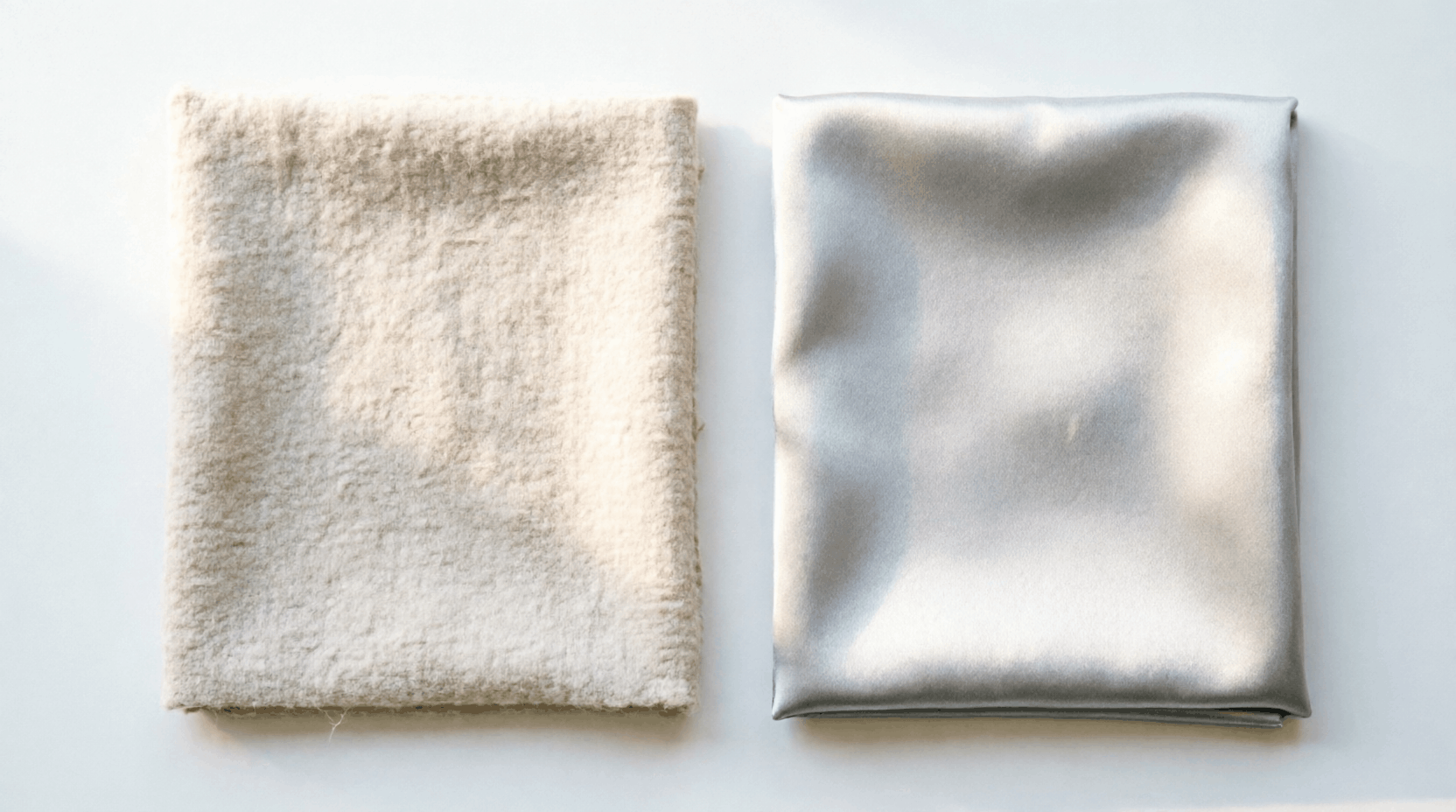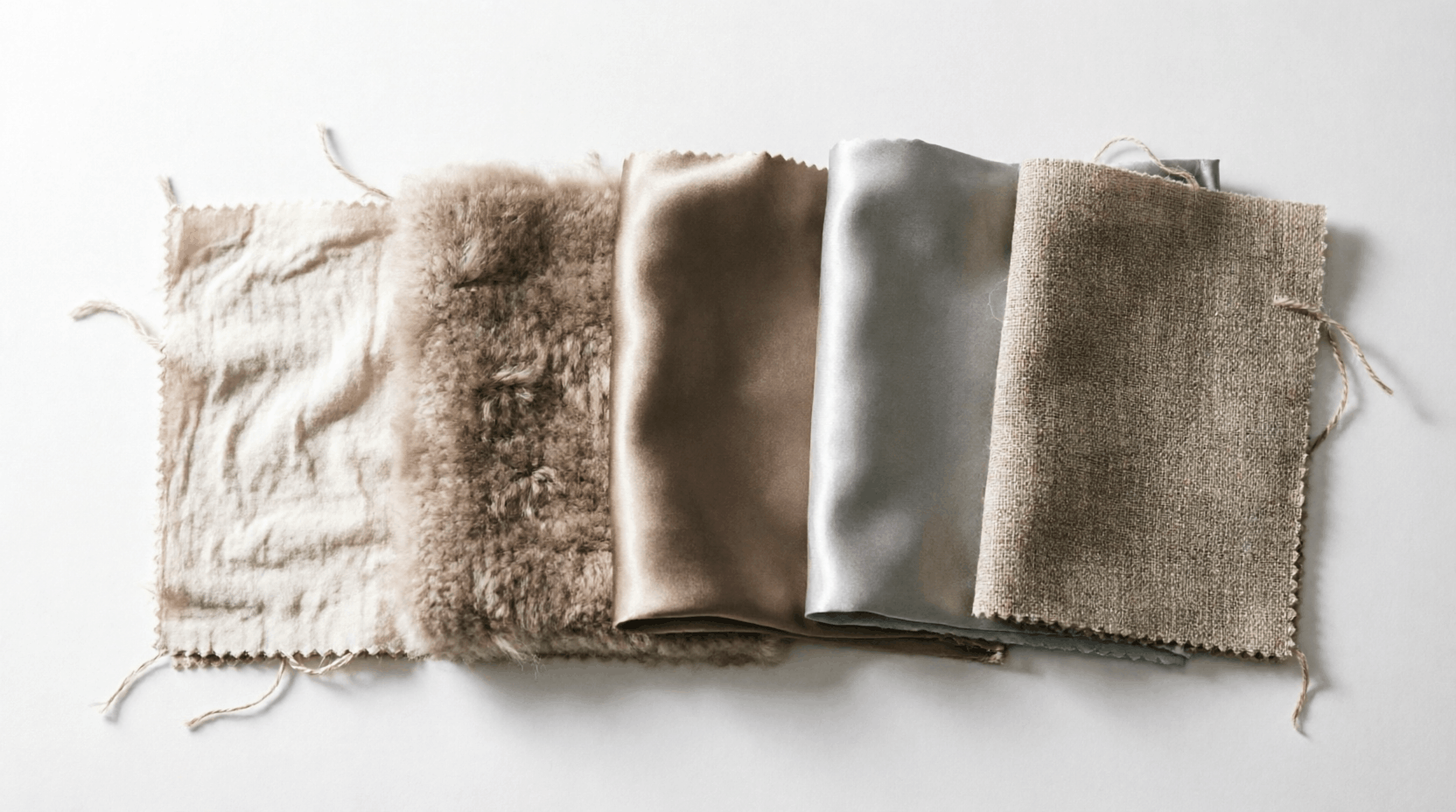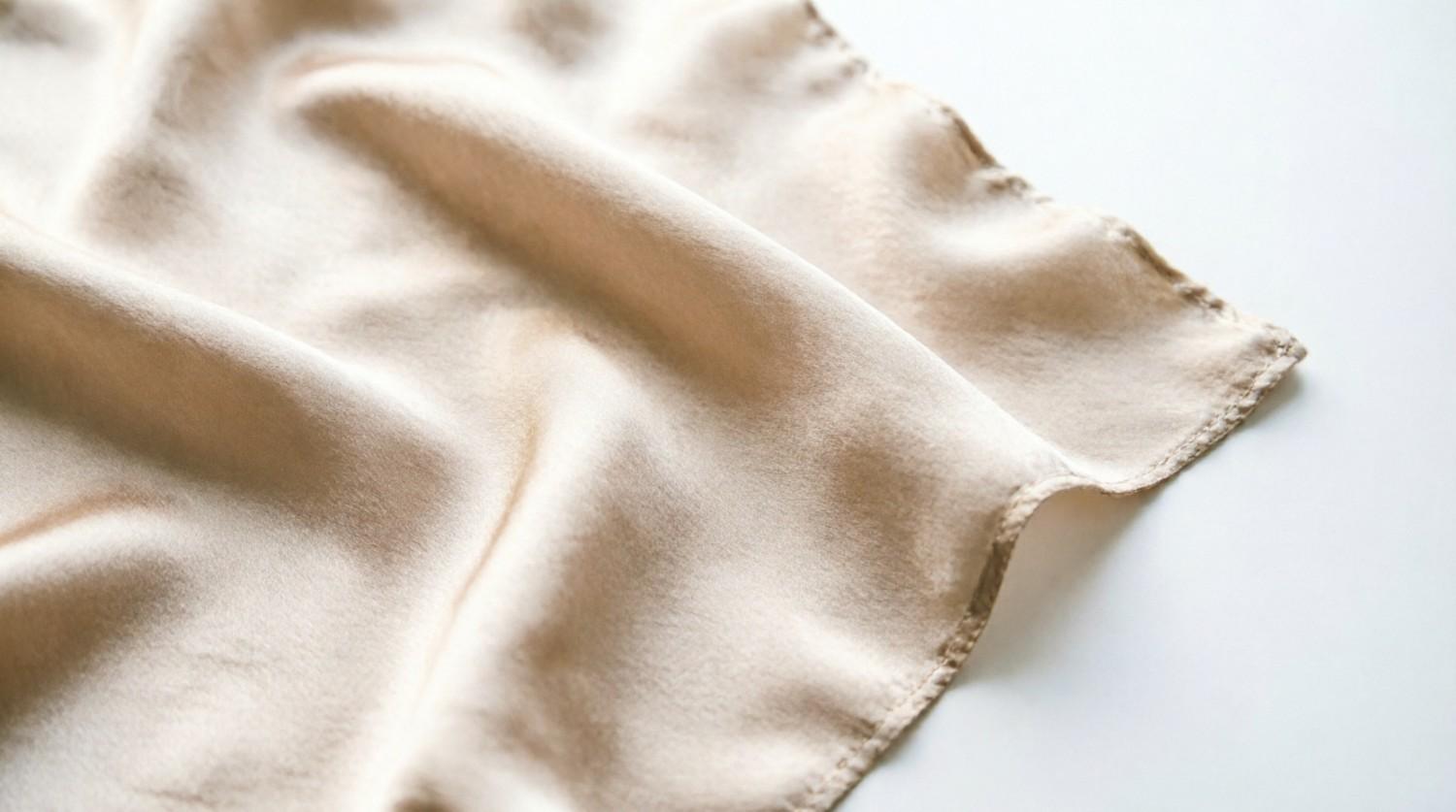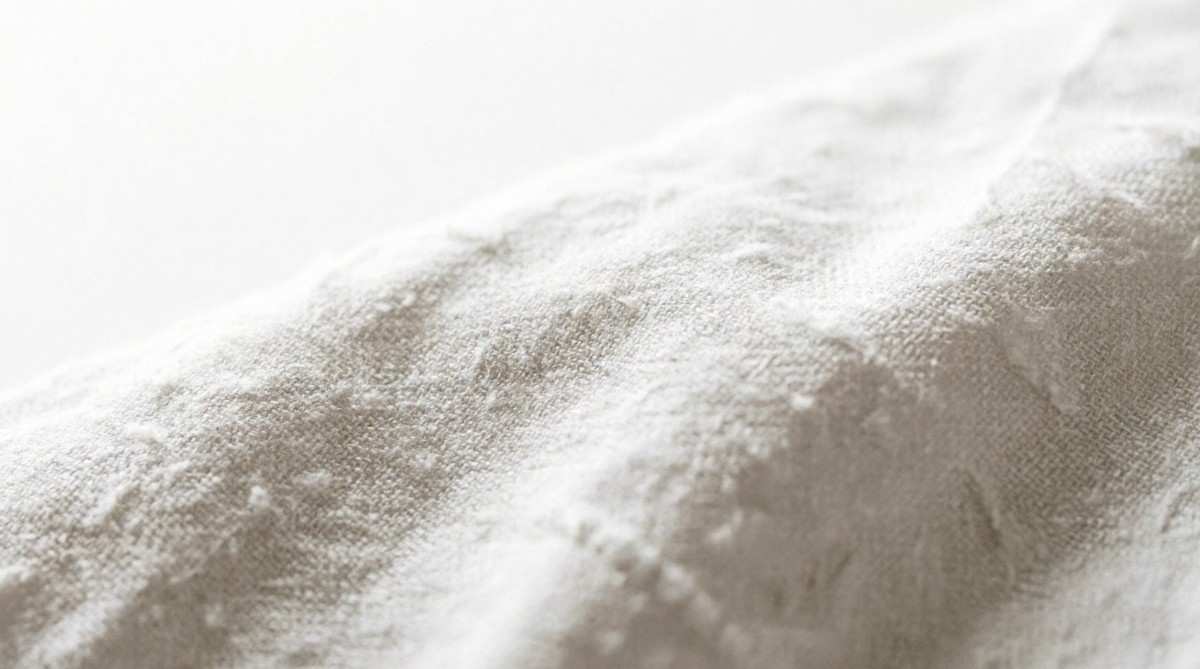
This guide explains what thread count is, how it is measured, where the marketing gets misleading, and what actually determines the quality of a bed sheet.
What Is Thread Count?
Thread count is the number of threads woven into one square inch of fabric — counting both the warp threads running lengthwise and the weft threads running crosswise. A fabric with 150 warp threads and 150 weft threads per square inch has a thread count of 300.
The concept is straightforward. More threads per inch means the threads must be finer to fit, which generally produces a smoother, softer surface. That relationship between thread count and quality is real — up to a point. The problem is that the bedding industry has stretched thread count far beyond the range where it actually correlates with quality.
What Thread Count Actually Tells You
In a genuinely high quality single-ply cotton fabric, thread count can meaningfully indicate quality in the range of roughly 200 to 500. Below 200, the weave is loose and the fabric tends to feel coarse. Between 200 and 400, you are in the range of good everyday sheets. Between 400 and 500, you are getting into premium territory with a noticeably smooth hand feel.
Beyond 500, the number stops being a reliable indicator of quality and starts being a marketing tool.
| Thread Count Range | What to Expect |
|---|---|
| Below 200 | Coarse, loose weave — basic utility sheets |
| 200 — 300 | Good everyday quality — durable and comfortable |
| 300 — 400 | Soft, smooth — good quality for regular use |
| 400 — 500 | Premium feel — noticeably soft and smooth |
| 500+ | Marketing territory — quality depends on other factors |
How Thread Count Gets Inflated
Here is where it gets interesting — and where a lot of consumers get misled.
Thread count is supposed to count single threads. But manufacturers discovered a loophole: multi-ply yarn. Instead of using a single strand of thread, they twist two, three, or even four thinner strands together to make one yarn. Then they count each individual strand separately when calculating thread count.
So a sheet made with two-ply yarn and 300 threads per inch gets marketed as a 600 thread count sheet — even though it has the same number of actual yarns crossing per inch as a genuine 300 thread count sheet. A sheet made with four-ply yarn and 300 threads per inch becomes a 1200 thread count sheet by this counting method.
The result is that a sheet labeled 800 thread count using multi-ply counting is not necessarily softer or better than a genuinely constructed 400 thread count sheet. It may actually feel worse — thicker and heavier rather than smooth and fine — because multi-ply yarns produce a denser, stiffer fabric.
What Actually Determines Sheet Quality
Thread count is one factor among several. The others matter just as much — sometimes more.
Fiber quality
The most important factor. A 300 thread count sheet made from long-staple Egyptian cotton will feel dramatically better than a 600 thread count sheet made from short-staple basic cotton. Long-staple cotton fibers produce finer, smoother yarn with fewer protruding ends — which means the fabric surface is smoother, softer, and pills less over time. Pima cotton and Egyptian cotton are the most well-known long-staple varieties.
Weave type
Percale and sateen are the two most common weave structures for bed sheets, and they produce very different feels regardless of thread count.
Percale is a plain weave — one thread over, one thread under — that produces a crisp, cool, matte fabric. Percale sheets feel fresh and breathable, which makes them popular in warm climates and with people who sleep hot. They get softer with every wash.
Sateen uses a satin weave structure — with longer surface floats — that produces a smooth, silky, slightly lustrous surface. Sateen sheets feel warmer and heavier than percale and have a subtle sheen. They are softer straight out of the packaging but can pill more over time.
Finishing treatments
Many sheets are treated with chemical softeners or other finishes that make them feel luxuriously soft in the store but wear off after a few washes. A sheet that feels incredible in the packaging but becomes stiff and rough after washing has been heavily finished — the softness was temporary. Higher quality sheets get softer with washing because the quality is in the fiber and weave, not a surface treatment.
How to Actually Shop for Sheets
Ignore the thread count number as a primary criterion. Instead, look at these things.
- Fiber content — Look for 100% cotton, and ideally long-staple cotton like Egyptian, Pima, or Supima. Avoid vague descriptions like "premium cotton" without specifics.
- Weave type — Decide whether you want the cool, crisp feel of percale or the smooth, warm feel of sateen. Both are high quality — it is a preference choice.
- Ply — Single-ply sheets with a genuine thread count of 300 to 500 will almost always outperform multi-ply sheets with inflated thread counts in the 800 to 1500 range.
- Wash test — The best sheets get softer and better after washing. If a sheet only feels good before it has been washed, the softness is a finishing treatment, not inherent quality.
Frequently Asked Questions
Is a 1000 thread count sheet better than a 400 thread count sheet?
Not necessarily. A 1000 thread count sheet is almost certainly using multi-ply yarn to inflate the number. A genuine 400 thread count sheet made from long-staple cotton will typically feel better and last longer than an inflated 1000 thread count sheet made from short-staple fiber.
What thread count is best for hot sleepers?
Lower thread counts in percale weave tend to be best for hot sleepers because the looser weave allows more airflow. A 200 to 300 thread count percale sheet in 100% cotton will sleep cooler than a 500 thread count sateen sheet.
Does thread count matter for pillowcases?
Yes, particularly if you have sensitive skin or hair. Higher quality, smoother pillowcases — whether measured by thread count or fiber quality — create less friction against skin and hair during sleep. Silk and high-quality sateen pillowcases are popular for this reason.
Why do cheap high thread count sheets feel rough after washing?
Because the softness was a chemical finish applied to the surface of the fabric, not a property of the fiber or weave. Once that finish washes out, the underlying low-quality fabric reveals itself. This is one of the clearest signs of an inflated thread count sheet.
The Bottom Line
Thread count is a real measurement that reflects something real about fabric — but only within a sensible range and only when the counting method is honest. The bedding industry has used it as a marketing number for so long that most consumers treat higher as automatically better, which is exactly what manufacturers want.
The smartest approach is simple: focus on fiber quality first, weave type second, and treat thread count as one data point among several rather than the defining measure of quality. A 300 thread count sheet made from long-staple Egyptian cotton in a percale weave will outperform a 1200 thread count sheet made from cheap multi-ply yarn almost every single time.