This guide walks through every stage — from raw fiber to finished cloth — in plain language. No technical jargon, no assumptions about prior knowledge. Just the process, explained clearly.
Stage One — Fiber Production
Everything starts with fiber. The type of fiber determines almost everything about the final fabric — how it feels, how it performs, and how much it costs. Fibers fall into two broad categories: natural and synthetic.
Natural fiber harvesting
Natural fibers come from plants or animals and are harvested rather than manufactured. Cotton bolls are picked from cotton plants — today mostly by machine, historically by hand. Wool is sheared from sheep once or twice a year. Silk is harvested by unwinding the continuous thread from silkworm cocoons in hot water. Linen fiber is extracted from the stalks of the flax plant through a process called retting, where the stalks are soaked to loosen the fibers inside.
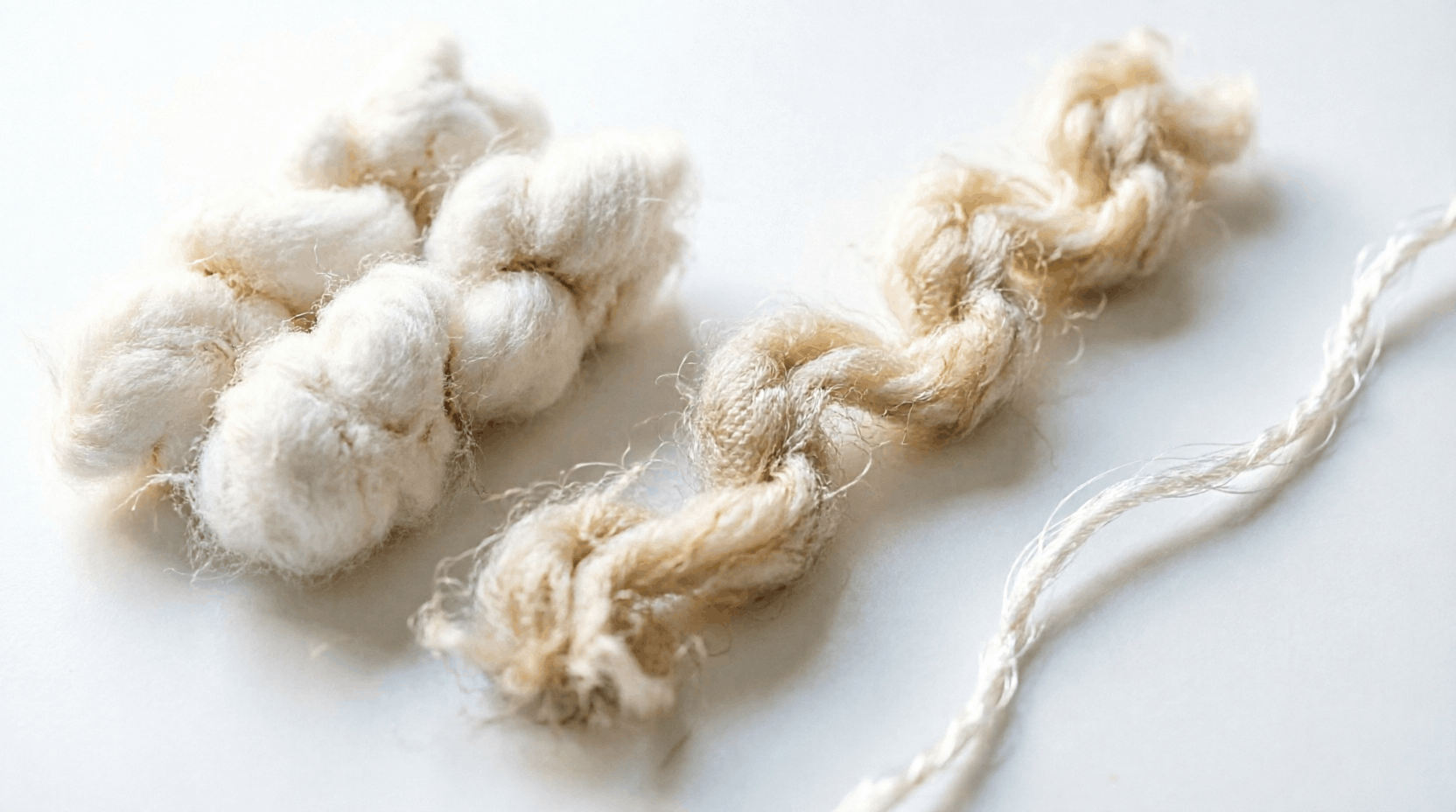
Each natural fiber arrives in a raw, messy state — full of seeds, oils, dirt, and short broken fibers that need to be removed before anything useful can be done with it.
Synthetic fiber production
Synthetic fibers like polyester and nylon do not exist in nature. They are created through chemical reactions, usually starting from petroleum-based raw materials. The chemicals are melted or dissolved into a thick liquid, then forced through tiny holes called spinnerets — similar in concept to a showerhead — to produce long, continuous filaments. These filaments cool and harden into fiber as they emerge. The diameter of the holes in the spinneret determines how fine or thick the fiber will be.
Stage Two — Fiber Preparation
Before natural fibers can be spun into yarn, they go through a preparation stage to clean and align them. This stage does not apply to synthetic fibers, which come out of the spinneret already clean and uniform.
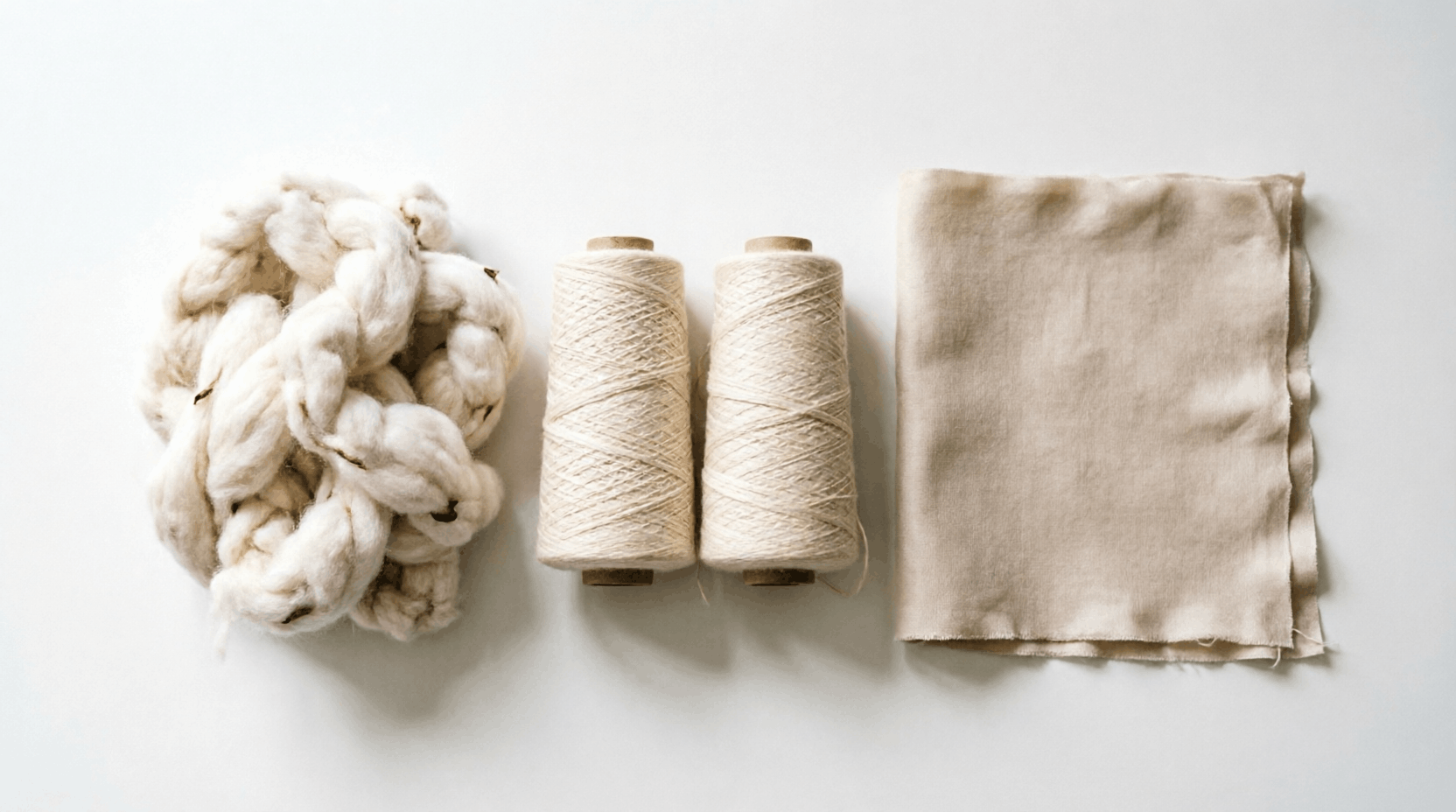
Raw cotton goes through a process called ginning, which separates the cotton fibers from the seeds and plant material. The cleaned fibers — called lint — are then pressed into large bales for transport to spinning mills.
Raw wool is washed to remove lanolin, dirt, and vegetable matter in a process called scouring. After drying, the wool fibers are carded — passed through rollers covered in fine wire teeth that untangle and align the fibers into a soft, even web. High-quality wool goes through an additional step called combing, which removes short fibers and produces a smoother, finer yarn.
Stage Three — Spinning
Spinning is the process of twisting fibers together to form yarn. This is where loose, individual fibers become a continuous thread strong enough to be woven or knitted.
The twist is what gives yarn its strength. Individual cotton fibers are very short and weak on their own — a single fiber would break with almost no effort. But when hundreds of fibers are twisted together, they grip each other and create a yarn that is far stronger than any single fiber. The tighter the twist, the stronger and smoother the yarn. A looser twist produces softer, fluffier yarn.
Historically, spinning was done entirely by hand using a spindle or spinning wheel. Today, industrial spinning machines can produce thousands of meters of yarn per minute. The basic principle has not changed — only the speed.
The thickness of the finished yarn — called the yarn count — affects the weight and texture of the final fabric. Fine yarns produce lightweight, smooth fabrics. Thick yarns produce heavier, coarser fabrics.
Stage Four — Fabric Construction
Once yarn is ready, it is formed into fabric. There are three main methods.
Weaving
Weaving interlaces two sets of yarn at right angles on a machine called a loom. The yarn running lengthwise is called the warp. The yarn running crosswise is called the weft. The pattern in which these two sets of yarn cross each other determines the weave structure — and different weave structures produce fabrics with very different properties. A plain weave produces a simple, stable fabric like cotton muslin. A twill weave produces the diagonal rib pattern seen in denim. A satin weave produces the smooth, lustrous surface of satin fabric.
Knitting
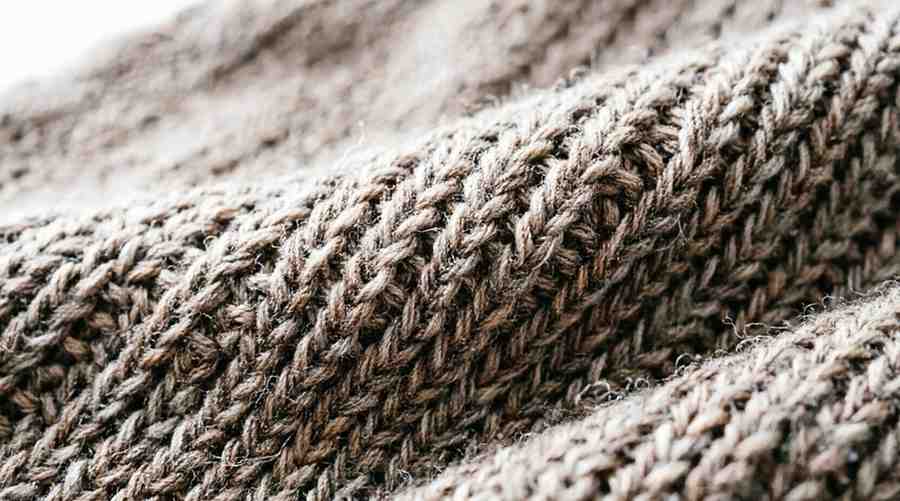
Knitting creates fabric by forming yarn into a series of interlocking loops. Unlike woven fabric, knitted fabric has significant stretch in all directions because the loops can expand and contract. Almost all t-shirt fabric, jersey, and knitwear is made this way. Industrial knitting machines can produce large rolls of knitted fabric at high speed.
Nonwoven construction
Some fabrics skip the yarn stage entirely. Nonwoven fabrics are made by bonding or matting fibers directly together using heat, pressure, or chemical adhesives. Felt is the most familiar nonwoven fabric. Many industrial fabrics, disposable medical textiles, and the interfacing used inside garments to add structure are also nonwoven.
Stage Five — Dyeing and Printing
At this point, the fabric exists but it is grey, undyed, and unfinished. Color is applied in this stage through dyeing or printing.
Dyeing submerges the fabric in a dye bath so that color penetrates the fibers throughout. The entire fabric becomes one color. Different fiber types require different dye chemistry — a dye that works on cotton will not necessarily work on polyester, which is why dyeing blended fabrics is more complicated than dyeing single-fiber fabrics.
Printing applies color to the surface of the fabric in a specific pattern rather than dyeing the whole thing. Screen printing pushes dye through a stencil onto the fabric surface. Digital textile printing works like an inkjet printer, applying tiny droplets of dye in precise patterns at high resolution. Roller printing uses engraved rollers to stamp repeating patterns at high speed.
Stage Six — Finishing
Finishing is the final stage before fabric reaches the consumer, and it has more impact on the end product than most people realize. Finishing treatments change how the fabric feels, looks, and performs.
| Finishing Treatment | What It Does |
|---|---|
| Mercerizing | Treats cotton with caustic soda to increase strength and luster |
| Sanforizing | Pre-shrinks fabric so it does not shrink further after washing |
| Calendering | Passes fabric through heated rollers to create a smooth, glossy surface |
| Water repellent treatment | Coats fibers with a chemical that causes water to bead and run off |
| Wrinkle resistance treatment | Chemical treatment that helps fabric hold its shape and resist creasing |
| Softening | Chemical or mechanical treatment that makes fabric feel softer |
Many of the properties you assume are natural to a fabric are actually the result of finishing. The water resistance of a rain jacket. The smooth feel of a dress shirt. The wrinkle resistance of travel pants. All finishing.
From Factory to Store
After finishing, fabric is rolled onto bolts, inspected for defects, and shipped to manufacturers who cut and sew it into the final products — clothing, home textiles, industrial materials, or whatever the end use requires. By the time a shirt reaches a store shelf, it has passed through fiber production, preparation, spinning, fabric construction, dyeing, and finishing — often across multiple countries and dozens of different facilities.
Frequently Asked Questions
How long does it take to make fabric?
In a modern industrial facility, the process from fiber to finished fabric can take anywhere from a few days to a few weeks depending on the fiber type, construction method, and finishing required. Traditional handwoven fabrics can take much longer — weeks or months for a single piece.
Why does fabric shrink when washed?
Most shrinkage happens because the fibers in the yarn were stretched during spinning and weaving. When exposed to heat and moisture, they relax back toward their natural length. Pre-shrinking treatments like sanforizing reduce this, but do not eliminate it entirely.
What is greige fabric?
Greige fabric — pronounced "gray" — is fabric that has been woven or knitted but not yet dyed or finished. It is the raw, undyed cloth that comes off the loom before any color or treatment is applied.
The Bottom Line
The shirt on your back traveled a long road to get there. Every stage of fabric production — from harvesting the fiber to the finishing treatments applied at the end — shapes what the final material is, how it feels, and how it performs. Understanding that process gives you a completely different relationship with the fabrics around you. You stop seeing a t-shirt and start seeing a series of deliberate choices made at every step of production.