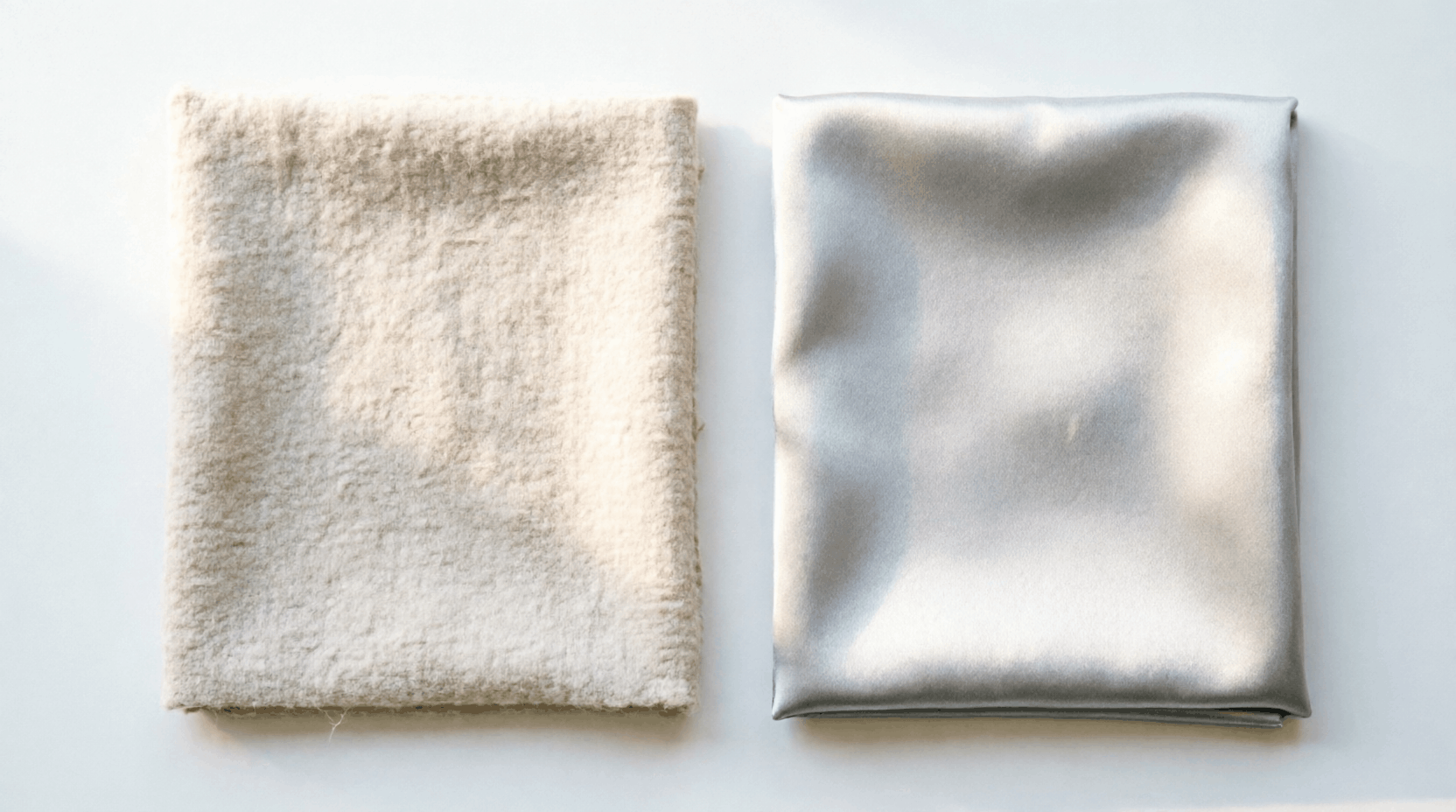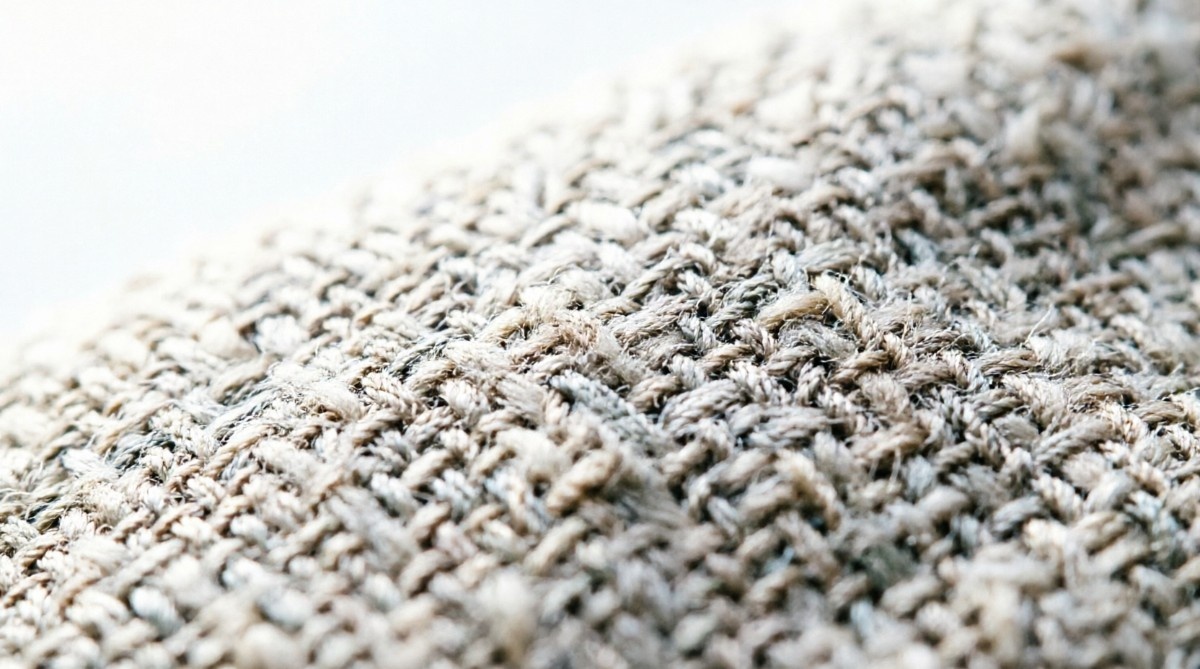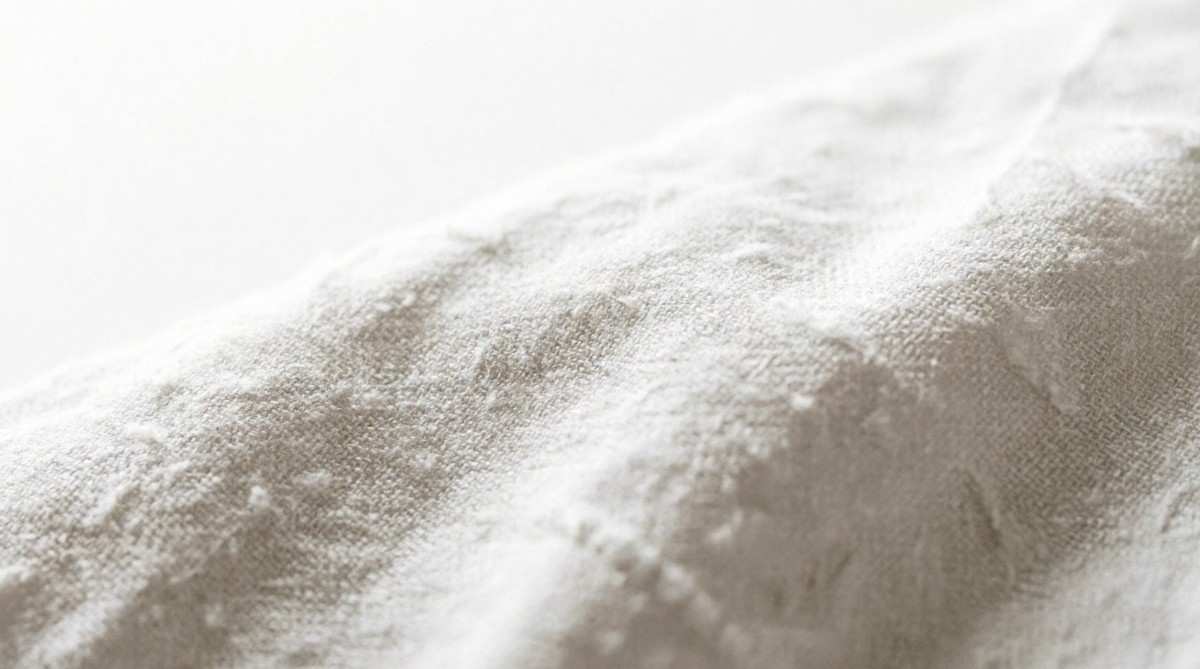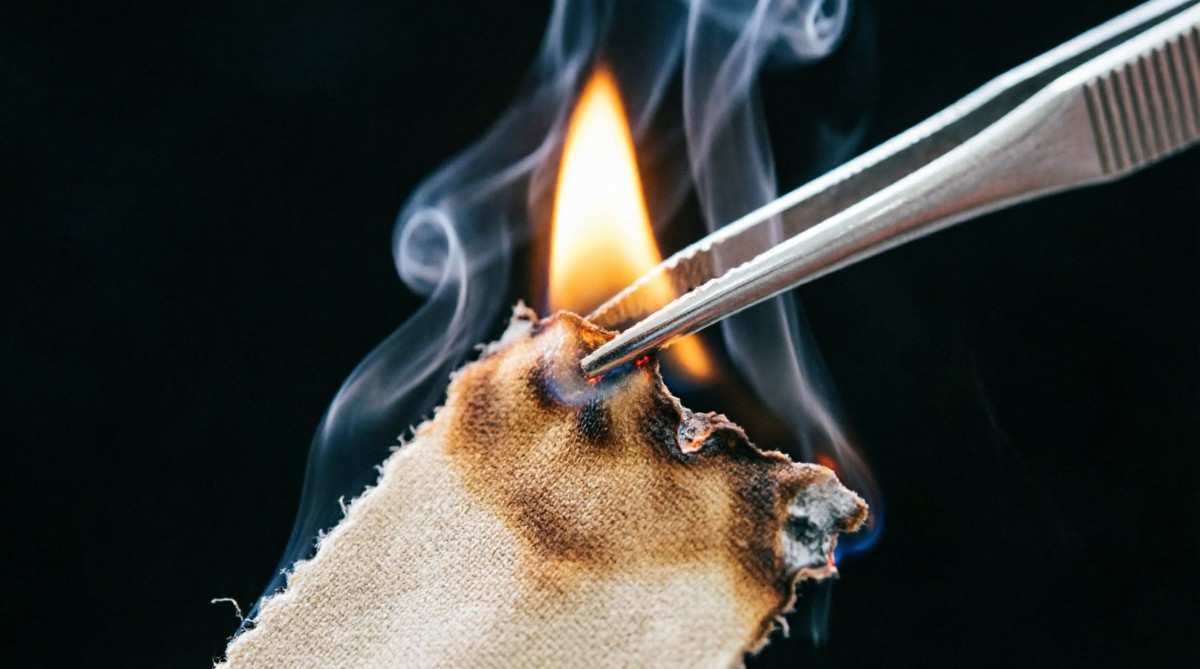
The burn test works because different fiber types — plant-based, protein-based, and synthetic — are made of fundamentally different chemical structures that burn, melt, smell, and leave residue in distinctly different ways. Those differences are consistent and reliable enough that an experienced person can identify most common fibers from a burn test alone. This guide takes you through the process step by step, from setting up a safe workspace to interpreting every detail of what you observe.
What the Burn Test Can and Cannot Tell You
Before you start, it helps to understand what you are actually getting from this test — and where its limits are.
The burn test reliably distinguishes between the three major fiber categories: cellulose fibers (cotton, linen, rayon), protein fibers (wool, silk), and synthetic fibers (polyester, nylon, acrylic). Within those categories, it can often narrow down further to the specific fiber. It will tell you whether a fabric is likely 100% natural, 100% synthetic, or a blend of the two.
What it cannot do with precision is identify exact blend percentages — a 60/40 cotton-polyester blend will give mixed signals rather than clean results for either fiber. It also cannot reliably distinguish between some pairs of fibers that have very similar burn characteristics — cotton and linen, for example, burn almost identically and require feel and visual inspection to separate. And it cannot identify specialty fibers or novel sustainable fibers that behave unusually in a burn test. For absolute certainty on fiber content, a textile laboratory analysis is the only definitive method. For practical home identification, the burn test gets you very close.
What You Need
The equipment for a burn test is minimal and almost certainly already in your home.
- A flame source — A lighter is ideal because you can control it precisely. A candle or match also works. Avoid torch lighters with a very intense blue flame — they burn too hot and make observation difficult.
- Metal tongs or tweezers — Essential for holding the sample safely. Never hold burning fabric with your fingers. Kitchen tongs or needle-nose pliers work perfectly. Metal is mandatory — plastic or rubber handles will melt.
- A small bowl of water — To extinguish the sample immediately if needed. Keep it within arm's reach throughout the test.
- A fireproof surface — A ceramic plate, metal tray, or glass dish to catch any ash or dripping melted synthetic. A concrete floor outdoors works well.
- Small fabric samples — Cut beforehand, not during the test. Approximately one inch square or a cluster of five to ten loose threads pulled from the fabric edge.
- A notepad — Optional but useful if you are testing multiple fabrics and want to record results for comparison.
Setting Up a Safe Workspace
Safety is not optional with the burn test. Most fabric burns quickly, and some synthetics melt and drip flaming material. A few simple precautions make the entire process safe and controlled.
Work outdoors or near an open window with good ventilation — some synthetic fibers produce toxic smoke when burned, and you do not want to breathe it in an enclosed space. Keep all flammable materials away from your workspace — loose fabric, paper, clothing. Make sure your own sleeves are rolled up or you are wearing close-fitting clothing that cannot accidentally catch a spark. Have your bowl of water ready before you light the flame. Never burn a large piece of fabric — small samples give better, more controlled results and are far safer.
Step by Step — How to Do the Burn Test
Step 1 — Prepare your sample correctly
Cut a small sample from an inconspicuous part of the fabric — an interior seam allowance, a hem turning, or a thread pulled from a cut edge. One inch square is enough for a complete test. If the fabric is tightly woven and you want a cleaner burn, pull five to ten threads from the cut edge and hold them together as a bundle — individual threads burn more clearly and evenly than a dense woven square. If the fabric has a print or coating on one side, include threads from both directions so you are testing the base fiber rather than any surface treatment.
Step 2 — Hold the sample correctly
Grip the sample at one end with your metal tongs or tweezers, leaving the other end free to be brought to the flame. Hold firmly but not so tightly that you crush the sample — you want to be able to observe it clearly during burning. Position yourself with the flame between you and the water bowl, so you can drop the sample into the water in one motion if anything goes wrong.
Step 3 — Approach the flame slowly
Bring the free end of the sample toward the flame slowly, from the side rather than directly above. Watch carefully as the fabric gets close to the flame — before it actually ignites. Some fibers react to heat before they touch the flame. Synthetics like polyester and nylon will begin to curl, shrink, or melt away from the heat source before they catch. Natural fibers typically do not react until they make contact with the flame. This pre-flame behavior is your first clue.
Step 4 — Observe the burning behavior
Once the sample catches, note exactly what you see. Does it burn quickly and eagerly, or slowly and reluctantly? Does it produce a large, steady flame or a small, sputtering one? Does it melt as it burns, or does it char and crumble? Is the flame a clean orange, or does it produce thick black smoke? Does it drip — and if so, does the drip continue burning after it falls, or does it extinguish? Watch for three to five seconds before removing the sample from the flame.
Step 5 — Remove from the flame and observe
Pull the sample away from the flame and watch what happens immediately. This is one of the most informative moments in the test. Does the fabric continue burning on its own after the flame source is removed, or does it self-extinguish? Natural cellulose fibers — cotton, linen, rayon — continue burning after the flame is removed. Protein fibers — wool, silk — typically self-extinguish. Most synthetics will either continue burning and dripping or self-extinguish depending on their formulation, but the melting behavior makes them identifiable regardless.
Step 6 — Smell the smoke carefully
While the sample is still smoldering or immediately after extinguishing, bring it cautiously close to your nose and smell the smoke. Do not inhale deeply — a brief sniff is enough. The smell is one of the most distinctive identifiers in the entire test. Natural cellulose fibers smell like burning paper or burning leaves. Protein fibers smell unmistakably like burning hair. Synthetics smell chemical, plastic, or acrid depending on the specific fiber. If you have ever accidentally singed your hair, you know exactly what wool and silk smell like when they burn.
Step 7 — Examine the residue
Once the sample has cooled, examine the ash or residue left at the burned end. Touch it carefully with the tip of a finger or a metal implement — never with bare fingers while it is still hot. The character of the residue is highly distinctive. Cellulose fibers leave a soft, grey or white ash that crumbles to powder when touched. Protein fibers leave a dark, brittle, crushable char. Synthetics leave a hard, glossy bead of solidified melted polymer that cannot be crushed — it snaps or stays solid. The hardness and crushability of the residue is one of the clearest single indicators in the burn test.
Reading the Results — Fiber by Fiber
Cotton
Cotton approaches the flame without shrinking and ignites readily on contact. It burns with a steady, even orange flame and continues burning enthusiastically after the flame is removed — it does not self-extinguish. The smoke is light grey or white. The smell is clean and organic — like burning paper, newspaper, or dried leaves. The ash is soft, grey, and crumbles instantly to powder when touched. There is no melting, no bead, and no plastic smell whatsoever. Cotton is arguably the easiest fiber to identify by burn test — its results are clean, consistent, and unmistakable.
Linen
Linen burns almost identically to cotton — steady orange flame, continues burning after flame removal, smells like burning paper or dry grass, leaves soft white ash. The main distinction from cotton is that linen burns slightly faster and the ash may be whiter rather than grey. The feel test is more useful than the burn test for separating linen from cotton — linen feels crisper, stiffer, and slightly rougher than cotton, with that characteristic slubby texture in the yarn.
Rayon and viscose
Rayon and viscose are cellulose-based fibers made from wood pulp, and they burn very similarly to cotton — orange flame, paper smell, soft ash, continues burning. The distinction is that rayon often burns slightly faster than cotton and leaves almost no ash at all — just a tiny trace of residue. The fabric itself may also shrink very slightly toward the flame before igniting, which cotton does not do. Rayon is one of the harder fibers to separate from cotton definitively by burn test alone.
Wool
Wool behaves very differently from plant fibers. It is reluctant to catch fire — it may sizzle and smolder before producing a real flame, and it often self-extinguishes when removed from the flame source. When it does burn, the flame is small and unsteady. The defining feature of wool's burn test is the smell — an unmistakable sulfurous odor of burning hair that is impossible to confuse with anything else. The residue is a dark, irregular char that crushes between the fingers into a gritty dark powder. Wool's natural flame resistance comes from its high protein and nitrogen content, which makes it inherently difficult to ignite — a property used in flame-resistant applications.
Silk
Silk burns slowly and reluctantly, similar to wool, and typically self-extinguishes when removed from the flame. The smell is also protein-based — burning hair or burning feathers — though slightly less pungent than wool. The residue is a small, round, crushable bead of dark char rather than the irregular char of wool. Silk's burn is cleaner and less smoky than wool, and the residue is more compact. The feel test helps distinguish silk from wool conclusively — silk is smooth and cool, wool is fuzzy and springy.
Polyester
Polyester is immediately identifiable by its pre-flame behavior — it begins to shrink and curl away from the heat before it catches. When it ignites, it burns with a black, sooty smoke and melts as it burns, sometimes dripping flaming molten polymer. The flame is orange with a darker core. The smell is distinctly plastic — like burning a shopping bag. When extinguished, polyester leaves a hard, shiny, rounded bead of solidified plastic at the burned end that cannot be crushed and snaps cleanly if bent. The hard bead is the single most reliable indicator of a synthetic fiber in the burn test.
Nylon
Nylon shrinks away from the flame before igniting, melts and drips as it burns, and leaves a hard plastic bead like polyester. The distinctions from polyester are in the details: nylon's bead tends to be tan, grey, or off-white rather than black, nylon produces less black smoke, and the smell is different — often described as similar to celery, burnt rubber, or a general chemical smell rather than the straightforwardly plastic smell of polyester. Nylon may also drip more freely than polyester while burning.
Acrylic
Acrylic is the most aggressive burner among common synthetics. It ignites readily, burns with a hot, sputtering, uneven flame, produces thick black smoke with an acrid, harsh chemical smell, and melts and drips while burning. The residue is a hard, irregular, brittle black bead — darker and less regular than polyester's clean round bead. Acrylic is often the easiest synthetic to identify by burn test precisely because its burning behavior is so dramatic and distinctive. If a fabric that looks like wool burns aggressively and smells chemical rather than like hair, it is almost certainly acrylic.
Acetate
Acetate is a semi-synthetic fiber made from cellulose acetate, and it burns with characteristics of both cellulose and synthetic fibers. It ignites readily, burns quickly, melts and drips while burning, and leaves a hard, black, irregular bead. The smell is distinctive — a sharp, vinegary odor often described as similar to hot vinegar or nail polish remover. That acidic smell is unique to acetate and makes it relatively easy to identify despite its mixed burn characteristics.
Spandex and elastane
Spandex burns slowly, melts rather than flaming, and self-extinguishes relatively easily. It leaves a soft, gummy, rubbery residue rather than a hard bead. The smell is chemical and slightly rubbery. In practice, spandex is rarely present in fabric on its own — it is almost always blended in small amounts with other fibers. In a blend, the spandex content usually shows up as slight melting or gumminess at the burned edge alongside the dominant fiber's ash characteristics.
| Fiber | Approaches Flame | Burns How | After Flame Removed | Smell | Residue |
|---|---|---|---|---|---|
| Cotton | No reaction | Steady orange flame | Continues burning | Burning paper | Soft grey ash, crumbles |
| Linen | No reaction | Fast orange flame | Continues burning | Burning grass | Soft white ash, crumbles |
| Rayon | Slight shrink | Fast orange flame | Continues burning | Burning paper | Almost no ash |
| Wool | No reaction | Slow, small flame | Self-extinguishes | Burning hair | Dark crushable char |
| Silk | No reaction | Slow, small flame | Self-extinguishes | Burning hair / feathers | Small crushable dark bead |
| Polyester | Shrinks and curls | Burns and melts, black smoke | May continue or stop | Burning plastic | Hard shiny black bead |
| Nylon | Shrinks and melts | Burns and drips | Self-extinguishes | Celery / chemical | Hard tan or grey bead |
| Acrylic | No reaction | Aggressive, sputters, black smoke | May continue | Acrid chemical | Hard brittle black bead |
| Acetate | Slight shrink | Burns and melts quickly | May continue | Hot vinegar | Hard irregular black bead |
| Spandex | Melts slightly | Burns slowly, melts | Self-extinguishes | Chemical, rubbery | Soft gummy residue |
Testing Blended Fabrics
Blends produce mixed signals in the burn test, and interpreting those signals correctly requires understanding what each component contributes. The general rule is that the burn characteristics of a blend are proportional to the fiber content — a fabric that is mostly cotton with a small amount of polyester will burn primarily like cotton, with slight melting at the edges and a small plastic bead alongside the soft ash. A fabric that is mostly polyester with a small amount of cotton will burn primarily like polyester, with a slight papery smell alongside the dominant plastic smell.
The most useful clue in a blend is often the residue. If you see both soft ash and a hard plastic bead in the same sample, the fabric is definitely a blend of a natural cellulose fiber and a synthetic. If the residue is purely soft and crumbles completely, the fabric is likely 100% natural. If the residue is entirely a hard plastic bead with no ash, the fabric is likely 100% synthetic.
Common-sense context helps too. A t-shirt labeled as 60% cotton 40% polyester that burns with mixed characteristics confirming both is simply confirming what the label says. A garment labeled 100% cotton that burns with noticeable melting and a plastic smell may have a mislabeled or blended fiber content — a useful discovery before you make care decisions based on the label.
Common Mistakes to Avoid
- Using too large a sample — Large pieces of fabric burn unpredictably and can flame up quickly. Always use small samples. A few threads give cleaner, more readable results than a large square.
- Not smelling the smoke — Many beginners focus entirely on the visual aspects of the burn and skip the smell test. The smell is often the single most definitive indicator — especially for distinguishing wool and silk from plant fibers.
- Testing printed or coated surfaces — Always test the base fiber, not a printed or chemically treated surface. Cut your sample from an unprinted interior area or pull threads from a raw cut edge.
- Rushing the observation — The burn test rewards careful, unhurried observation. Watch the entire sequence — approach, burn, post-flame behavior, and residue — before drawing a conclusion. Missing any step means missing important information.
- Testing in poor lighting — Flame color and smoke color are important clues. Test in a well-lit environment where you can observe both clearly.
- Concluding too quickly from one test — Run the burn test as part of a broader identification process that includes feel and visual inspection. The more consistent the evidence across multiple tests, the more confident your identification.
Frequently Asked Questions
Is it safe to burn fabric indoors?
With small samples and proper precautions, yes — but outdoors or near an open window is always preferable. Synthetic fibers like polyester and acrylic produce toxic compounds when burned, and the fumes from even a small sample are best not inhaled in an enclosed space. Cotton and linen are much safer to burn indoors in small samples, but ventilation is still good practice regardless of the fiber.
Why does my cotton burn result look different from what I expected?
Several factors can alter burn test results from the textbook description. Chemical finishes — wrinkle-resistant treatments, flame retardants, stain repellents — can significantly change how a fabric burns. A cotton fabric treated with a flame retardant may self-extinguish like wool rather than continuing to burn. A fabric with a heavy print or dye may produce different smoke colors. Whenever possible, test an unfinished area of the fabric — an interior seam allowance or the cut edge of an untreated section.
Can I use the burn test on delicate or expensive fabric?
Yes — that is exactly why you test from an inconspicuous area. Pull a few threads from an interior seam allowance or hem turning that will never be visible in the finished garment. A few threads are all you need for a complete, informative burn test.
What if the fabric does not catch fire at all?
If a fabric consistently resists igniting and chars rather than flaming, it has likely been treated with a flame retardant or is made from an inherently flame-resistant fiber. Wool has natural flame resistance and may be difficult to ignite. Some specialized fabrics — Nomex, Kevlar, inherently flame-resistant polyester — are engineered specifically not to burn under normal conditions. A fabric that simply will not burn is a useful identification result in itself, particularly if you are trying to verify safety claims.
How do I get better at reading burn test results?
Practice with known fibers first. Take a piece of 100% cotton fabric with a clear label and burn it so you know exactly what cotton looks, smells, and feels like as residue. Then test 100% wool, 100% polyester, and 100% silk the same way. Once you have the reference points locked in from known samples, identifying unknown fabrics becomes much faster and more reliable.
The Bottom Line
The fabric burn test is one of the most genuinely useful skills in a sewist's or textile buyer's toolkit — low cost, fast, and remarkably informative when done correctly. The seven-step process — prepare your sample, hold it correctly, approach the flame slowly, observe the burning behavior, note what happens after the flame is removed, smell the smoke, and examine the residue — takes less than two minutes from start to finish and gives you information no amount of label reading can always provide.
Like any skill, it improves dramatically with practice. Test known fabrics first to build your reference library of sensory memory. Then approach unknown fabrics with the systematic observation the test requires. The combination of flame behavior, smoke character, smell, and residue type will identify the vast majority of fabrics you will ever encounter — often with more confidence than the label itself deserves.