Weaving is not complicated in principle. Two sets of yarn cross each other at right angles, and the way they interlace determines everything about how the finished fabric looks, feels, and performs. This guide explains how it works — from the basic structure of a woven fabric to the different weave types and what makes each one different.
The Basic Structure of Woven Fabric
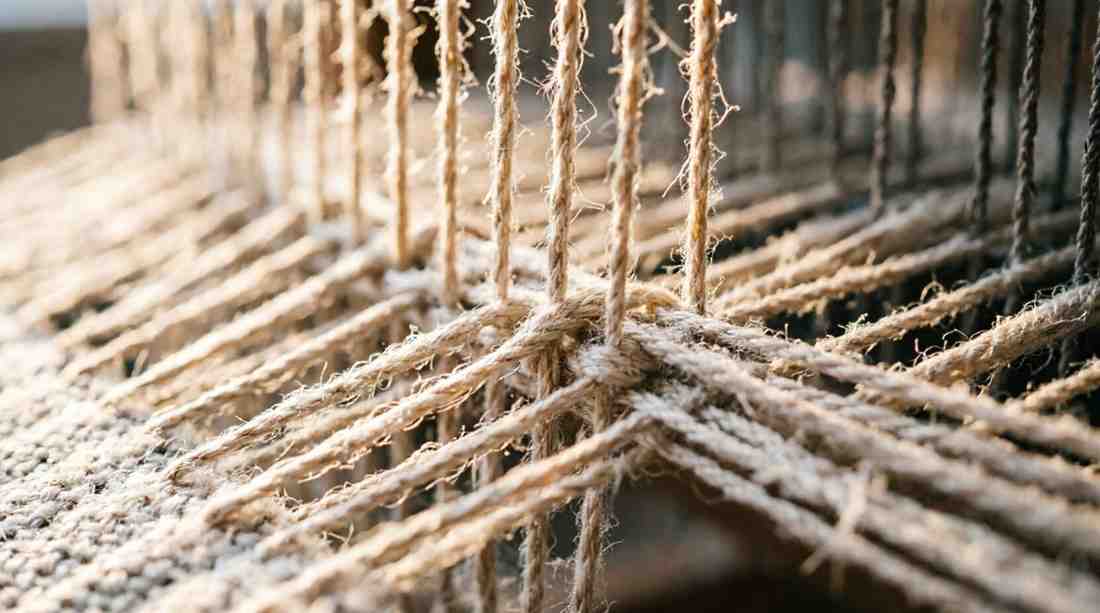
Every woven fabric is built from two sets of yarn running at right angles to each other. These two sets have specific names that come up constantly in any discussion of weaving.
The warp is the set of yarn that runs lengthwise — parallel to the long edge of the fabric. Warp yarns are held under tension on the loom before weaving begins. They form the foundation of the fabric structure and are usually the stronger, more tightly twisted yarns because they have to withstand the tension of the weaving process.
The weft is the set of yarn that runs crosswise — perpendicular to the warp. The weft yarn is passed back and forth through the warp, going over some warp threads and under others in a specific sequence. Each pass of the weft across the full width of the fabric is called a pick.
The interlacing of warp and weft is what creates fabric. The specific pattern in which the weft passes over and under the warp threads is called the weave structure, and changing that pattern produces completely different fabrics — even when the same yarn is used.
What Is a Loom?
A loom is the device that holds the warp threads under tension and allows the weft to be passed through them in a controlled way. Every loom — from a simple frame loom made of sticks to a massive industrial jacquard machine — does the same fundamental job. It keeps the warp threads tight and organized so that the weft can be interlaced through them efficiently.
The key mechanism on any loom is the ability to raise some warp threads while lowering others, creating an opening called the shed. The weft yarn passes through this opening in a single motion. Then the raised and lowered threads are reversed, the weft passes back in the other direction, and the process repeats. Each pass locks the previous one in place, and the fabric grows from one end of the loom toward the other.
On a hand loom, a weaver does this manually — raising heddles by hand or foot to create the shed, then passing a shuttle carrying the weft yarn through the opening. On an industrial power loom, the entire process is automated and can run at hundreds of picks per minute.
The Three Basic Weave Structures
Every woven fabric in existence is based on one of three fundamental weave structures, or a variation of them.
Plain weave
Plain weave is the simplest and most common weave structure. The weft passes over one warp thread, then under the next, then over the next, alternating all the way across. On the return pass, the sequence reverses. The result is a simple checkerboard interlacing where every thread crosses every other thread it meets.
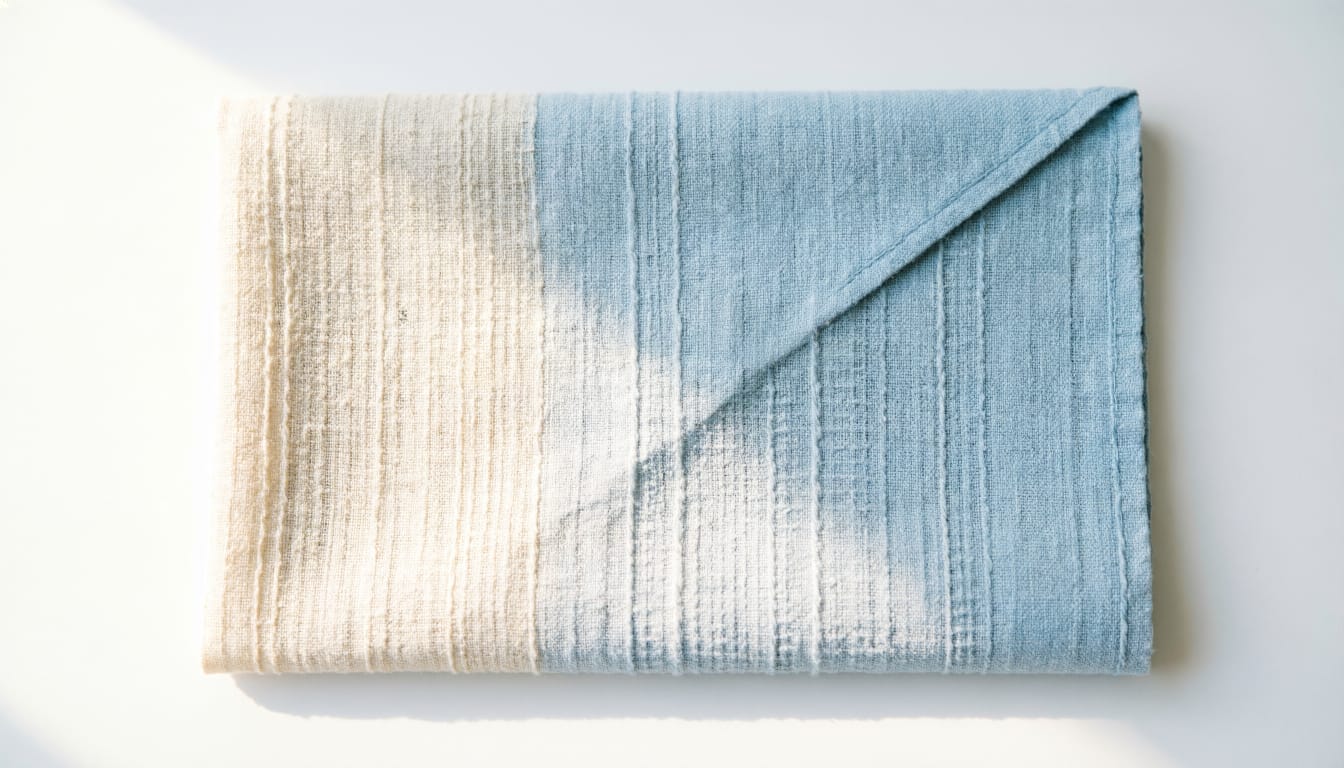
Plain weave fabrics are stable, durable, and relatively firm. They do not stretch much. Cotton muslin, linen, canvas, chiffon, and most basic cotton fabrics are plain weave. The tightness of the weave — how closely the threads are packed together — determines whether the fabric is sheer and lightweight like chiffon or heavy and stiff like canvas.
Twill weave
Twill weave passes the weft over two or more warp threads before going under one or more, and each successive row shifts the pattern one thread to the side. This offset creates the characteristic diagonal rib that you can see clearly on denim, chino fabric, and herringbone cloth.
Twill weave fabrics are generally softer and more drapable than plain weave fabrics of the same yarn because the longer interlacing floats — where the weft passes over multiple warp threads — allow the fabric to move more freely. Denim, gabardine, tweed, and flannel are all twill weaves. The diagonal pattern also makes twill fabrics better at hiding dirt and wear, which is one reason denim became the default fabric for workwear.
Satin weave
Satin weave takes the principle of the float further. The weft passes over four or more warp threads before going under one, and the binding points are spread as far apart as possible across the fabric surface. This leaves long stretches of yarn lying flat on the surface with minimal interlacing interrupting them.
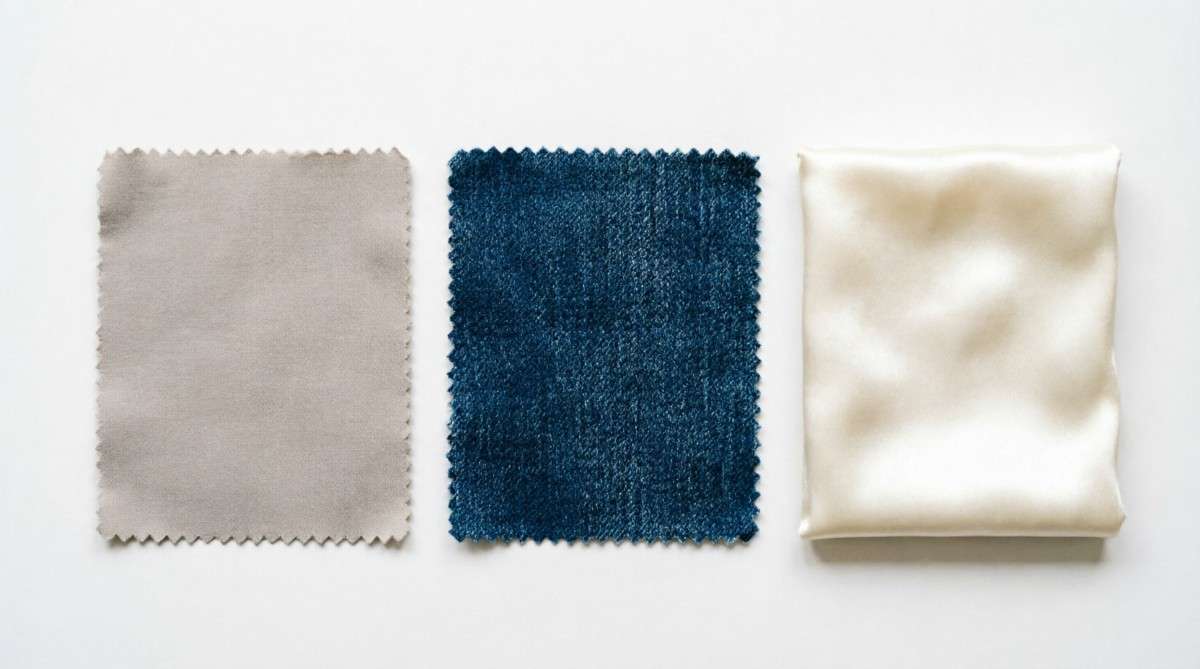
Those long surface floats reflect light smoothly and evenly, which is what gives satin fabric its distinctive lustrous surface. Satin weave fabrics are smooth, slippery, and drape beautifully — but they snag easily because those long surface floats can catch on rough surfaces. True satin is typically made from silk or polyester. Sateen is the same weave structure applied to cotton.
| Weave Type | Structure | Key Properties | Common Fabrics |
|---|---|---|---|
| Plain weave | Over one, under one | Stable, durable, firm | Muslin, canvas, chiffon, linen |
| Twill weave | Over two or more, diagonal rib | Soft, drapable, hides dirt | Denim, gabardine, tweed, flannel |
| Satin weave | Long surface floats | Smooth, lustrous, slippery | Satin, sateen, charmeuse |
Beyond the Basics — Variations and Complex Weaves
The three basic structures are just the foundation. Variations and combinations of these structures produce an enormous range of fabrics with different textures, patterns, and properties.
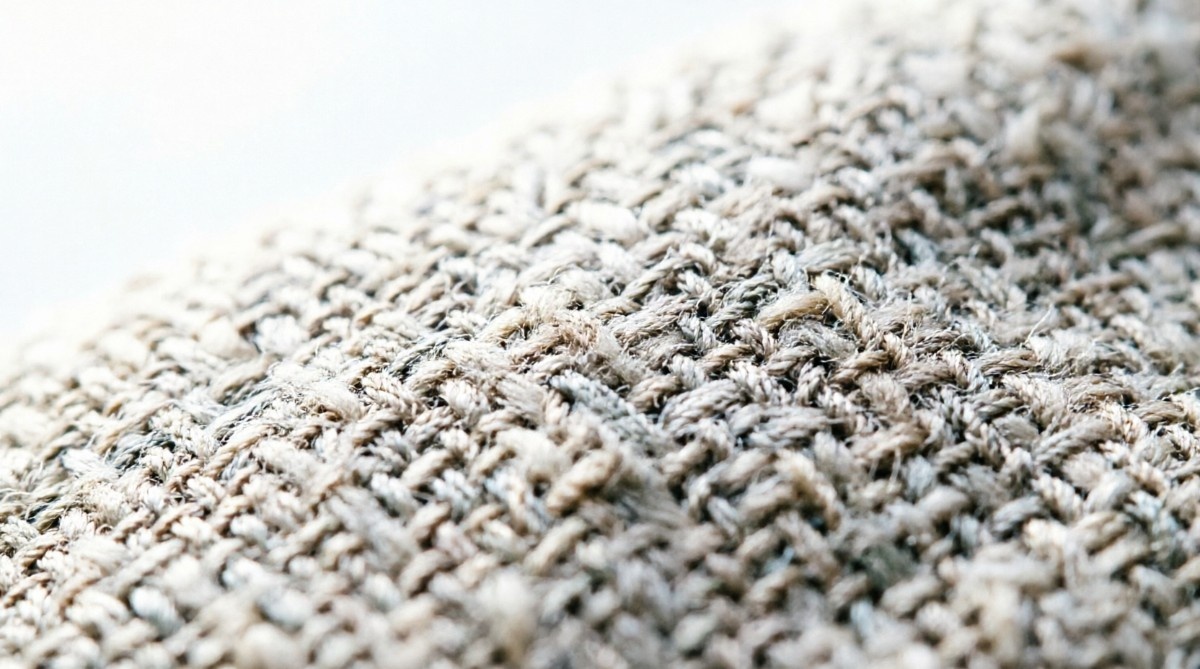
Basket weave is a plain weave variation where two or more warp and weft threads are treated as one unit, creating a softer, more flexible fabric with a visible block pattern. Oxford cloth — commonly used in Oxford shirts — is a basket weave.
Jacquard weaving uses a computerized or punch-card controlled loom that can raise each warp thread individually rather than in groups. This allows extremely complex patterns — florals, figures, intricate geometric designs — to be woven directly into the fabric structure rather than printed on top. Brocade, damask, and tapestry are all jacquard weaves.
Pile weaves create a three-dimensional surface by weaving extra loops of yarn into the base fabric structure. When those loops are cut, the result is velvet. When they are left uncut, the result is terry cloth — the fabric used for towels. The height and density of the pile determines how plush the fabric feels.
Woven vs Knitted Fabric — Key Differences
Weaving is not the only way to make fabric. Knitting — forming yarn into interlocking loops — produces fabric with very different properties. Understanding the difference helps explain why your dress shirt behaves nothing like your t-shirt, even if both are made from cotton.
| Factor | Woven Fabric | Knitted Fabric |
|---|---|---|
| Stretch | Minimal stretch | Stretches in all directions |
| Structure | Firm and stable | Flexible and elastic |
| Wrinkles | Wrinkles more easily | More wrinkle resistant |
| Fraying | Frays at cut edges | Does not fray |
| Typical uses | Shirts, suits, jeans, home textiles | T-shirts, knitwear, activewear |
Frequently Asked Questions
What is the most common weave used in everyday fabric?
Plain weave is the most widely used weave structure in the world. Most basic cotton fabrics, linen textiles, and many synthetic fabrics use plain weave because it is simple to produce, durable, and versatile.
Why does woven fabric fray when cut?
Woven fabric frays because the warp and weft threads are only held in place by their interlacing with each other. When you cut through the fabric, the threads at the cut edge are no longer interlaced with anything and begin to pull free. Knitted fabric does not fray because its looped structure holds together differently at cut edges.
What is the selvedge on woven fabric?
The selvedge is the self-finished edge that runs along both long sides of a woven fabric — the edges where the weft yarn turns back on itself at the end of each pass. Selvedge edges do not fray and are often used as a reference edge when cutting fabric for sewing projects.
Is handwoven fabric better than machine woven?
Not necessarily better — just different. Handwoven fabric has slight irregularities that give it a unique character and texture that machine weaving cannot replicate. Machine woven fabric is more uniform, more consistent, and far cheaper to produce. Which is better depends entirely on what the fabric is for.
The Bottom Line
Weaving is one of those skills so fundamental to human civilization that it is easy to take for granted. Every woven fabric you have ever owned — every pair of jeans, every bed sheet, every linen shirt — is the product of the same basic principle: two sets of yarn crossing each other at right angles, interlaced in a specific pattern. The pattern changes. The yarn changes. The loom changes. But the logic underneath it all has remained the same for thousands of years.
Once you understand weave structures, you start seeing them everywhere. You look at a piece of fabric differently when you know whether it is plain, twill, or satin woven — and you understand why it behaves the way it does.