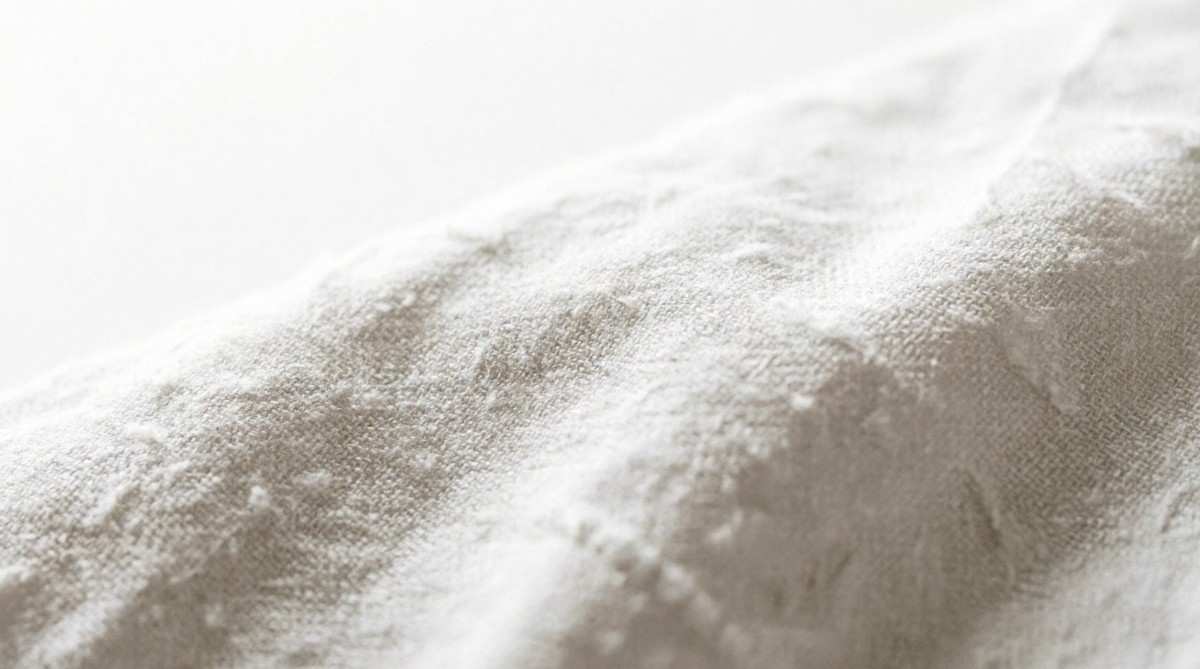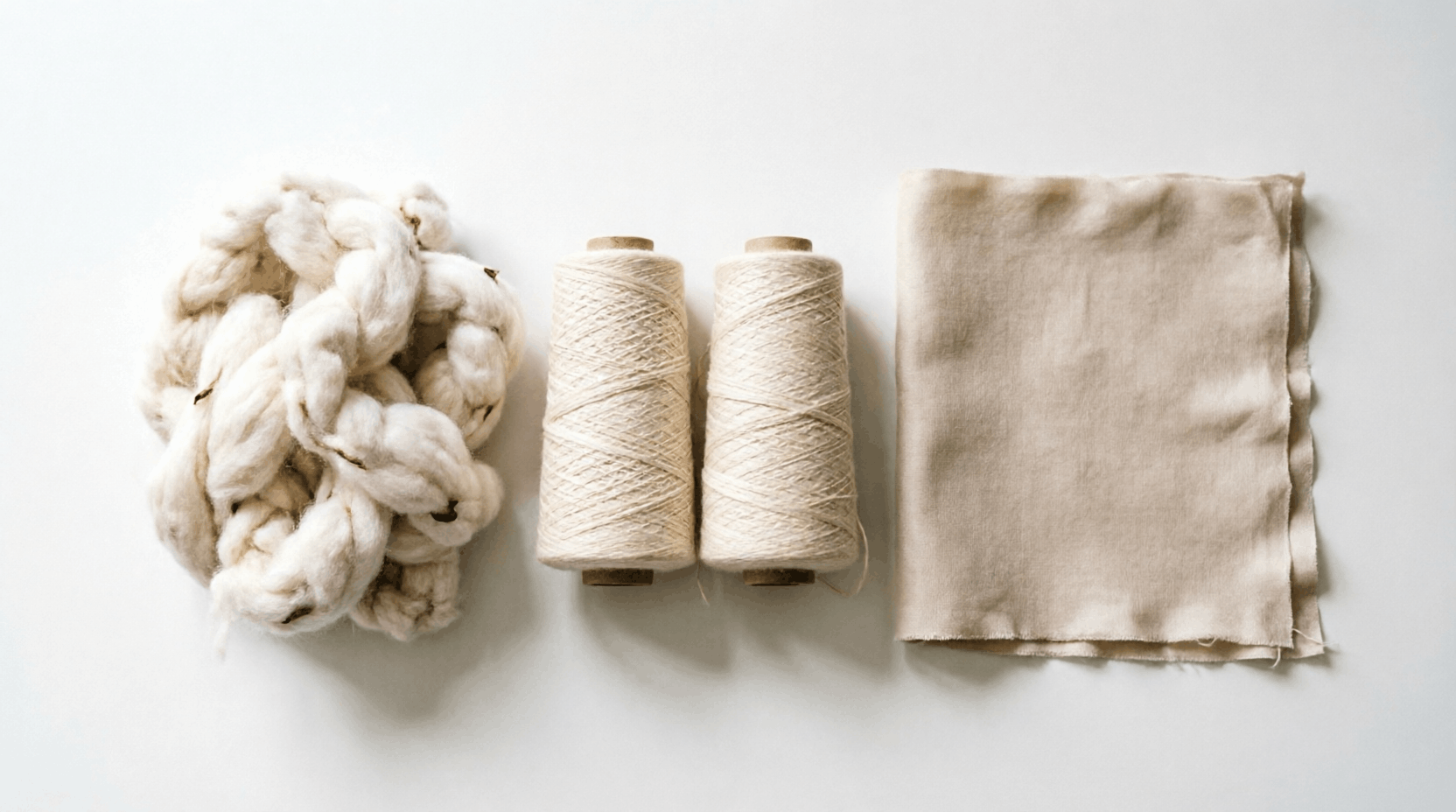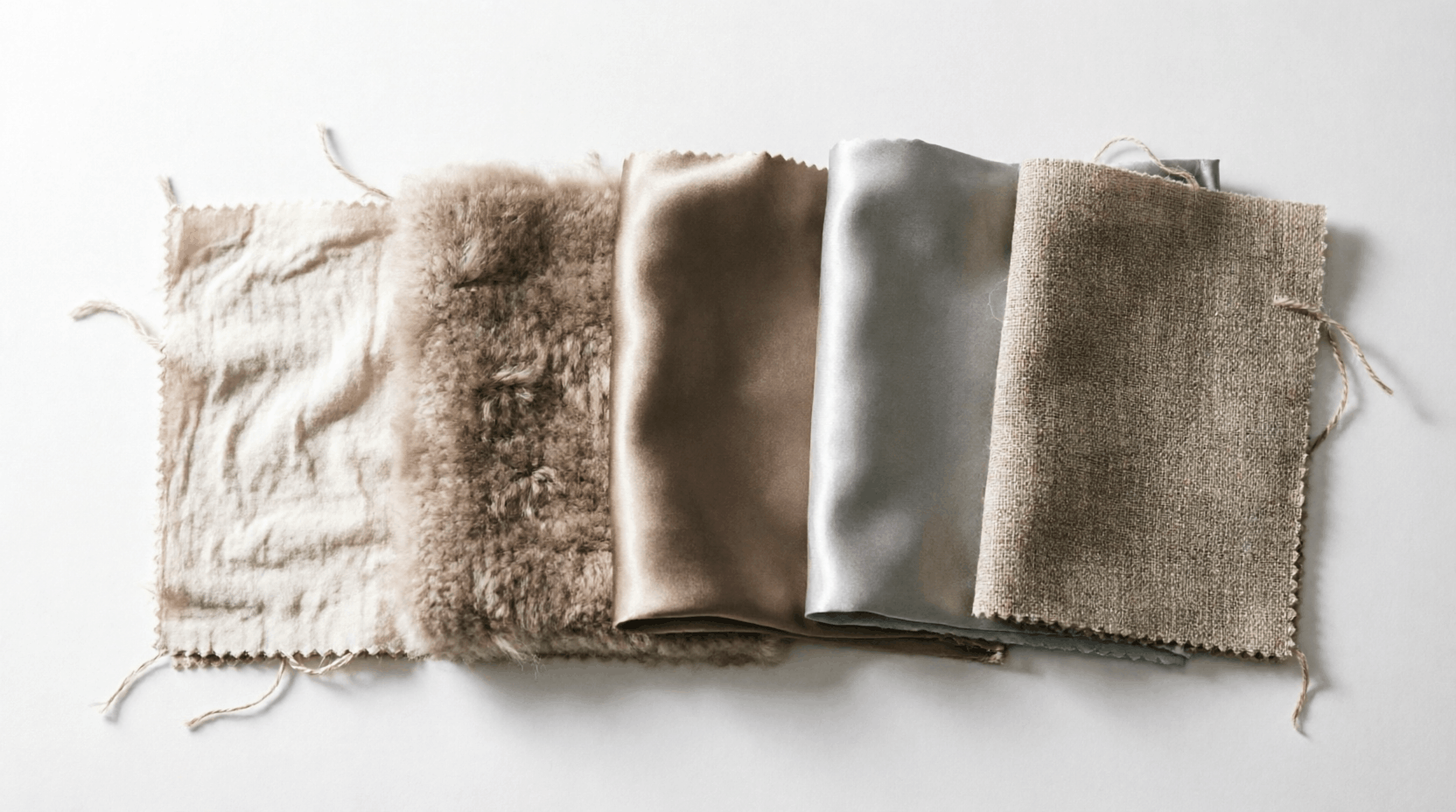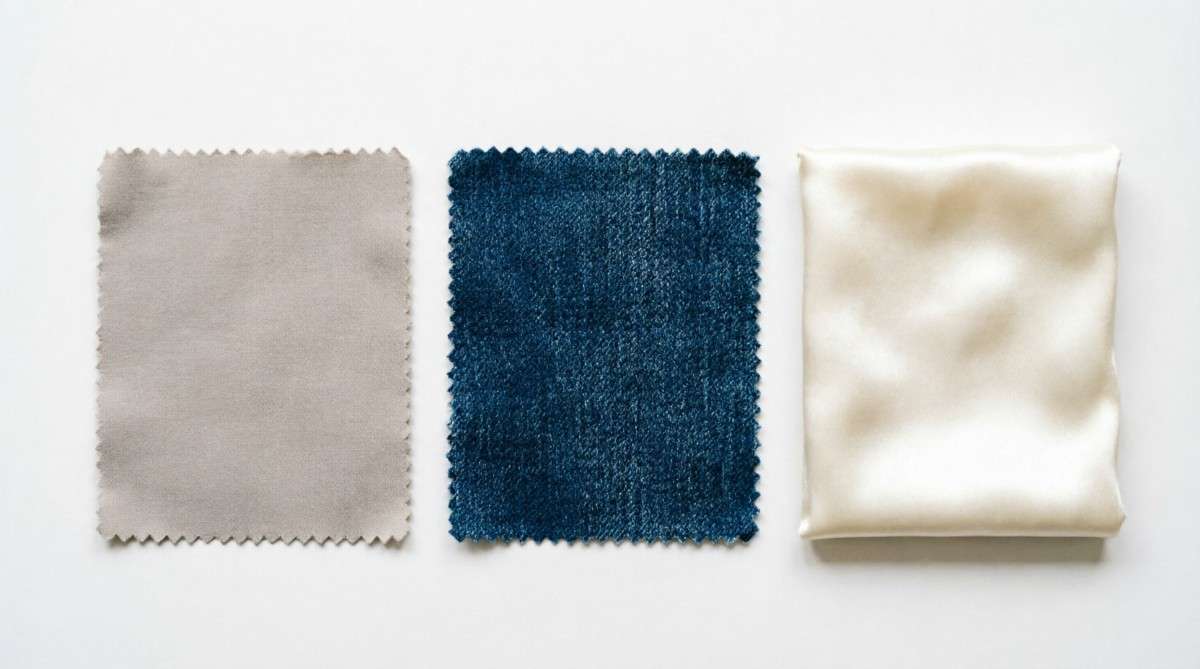
Weave structure is the pattern in which the warp and weft threads interlace with each other, and it is one of the most powerful variables in all of textile making. The same yarn woven in three different structures produces three fabrics with dramatically different surfaces, drape, strength, and character. Understanding the three fundamental weave types — plain, twill, and satin — gives you a working framework for understanding almost every woven fabric you will ever encounter.
What Is a Weave Structure?
Every woven fabric is built from two sets of threads crossing at right angles — the warp running lengthwise and the weft running crosswise. The weave structure is the specific pattern that governs which threads go over and which go under at every intersection point. That pattern repeats across the entire fabric to create a consistent surface.
The simplest way to think about it is as a sequence of overs and unders. In a plain weave, the sequence is over one, under one, repeated continuously. In a twill weave, the sequence might be over two, under one, with each row shifted to create a diagonal. In a satin weave, the warp thread floats over four or more weft threads before going under. Each pattern produces a different fabric surface, a different amount of interlacing, and a different set of physical properties.
The three weave structures described here — plain, twill, and satin — are known as the three primary or foundation weaves. Every other weave structure in existence is either a variation of one of these three or a combination of them.
Plain Weave
How it works
Plain weave is the simplest possible interlacing pattern. Each warp thread passes over one weft thread, then under the next, alternating continuously across the entire width. The weft threads do the same — over one warp, under the next, back and forth. The result is a tight, even checkerboard-like grid where every thread interlaces with every adjacent thread. No thread floats over more than one crossing thread before going under again.
Because of this maximum interlacing, plain weave fabrics have more interlocking points per square inch than any other weave. That density of interlacing is both a strength and a limitation — it produces strong, stable fabrics but limits how much the threads can move relative to each other, which reduces drape and flexibility.
Properties of plain weave fabric
Plain weave produces a flat, matte, relatively smooth surface that looks the same on both sides. The fabric is firm and holds its shape well. It is the most breathable of the three weave structures because the tight, regular interlacing does not allow long thread floats that would trap air or compress against each other. Plain weave fabrics wrinkle easily — precisely because the threads are so tightly locked together that there is no flexibility to absorb movement — and they are the most prone to showing wear at points of friction since the interlacing points are densely concentrated.
Common plain weave fabrics
The list of plain weave fabrics is enormous because it is the foundation weave for so many everyday textiles. Cotton muslin, linen, chiffon, organza, voile, taffeta, georgette, flannel, and most basic shirting fabrics are all plain weaves. Percale — the crisp, cool bedsheet fabric — is a plain weave. So is cheesecloth, canvas, and most basic cotton broadcloth. The reason so many different fabrics share the same weave structure is that plain weave's properties vary enormously depending on the fiber type, yarn weight, and thread density used.
Twill Weave
How it works
Twill weave introduces longer floats — each warp thread passes over two or more weft threads before going under one — and staggers each successive row by one thread. This staggered offset is what creates the defining visual feature of twill: a diagonal rib or line running across the fabric surface. The angle and direction of that diagonal line depend on the specific twill construction and how the loom is threaded.
The most common twill construction is a 2/1 twill — over two, under one — which produces a distinct diagonal at roughly 45 degrees. Denim uses a 3/1 twill — over three, under one — which creates a more pronounced diagonal and a heavier, more durable fabric. The diagonal can run from lower left to upper right, which is called a right-hand twill and is the standard for most denim, or from lower right to upper left, called a left-hand twill.
Properties of twill weave fabric
Because twill has fewer interlacing points than plain weave, the threads have more freedom to move against each other. This gives twill fabrics better drape and more flexibility than equivalent plain weave fabrics. The diagonal construction also makes twill inherently stronger than plain weave — when the fabric is pulled or stressed, the diagonal lines distribute that stress along their length rather than concentrating it at individual interlacing points. Twill fabrics are more resistant to wrinkling than plain weave for the same reason — the threads can shift slightly to absorb movement rather than locking rigidly together.
The surface of a twill is textured rather than flat, with the diagonal rib visible to the eye and palpable to the touch. Most twill fabrics have a right side and a wrong side — the diagonal is usually more pronounced and better defined on one face than the other.
Common twill weave fabrics
Denim is the most widely recognized twill fabric in the world. Chino, gabardine, herringbone, houndstooth check, serge, tweed, and drill cloth are all twill weaves. Khaki pants, most suit fabrics, and a large proportion of workwear and outerwear fabrics use twill construction. The combination of strength, drape, and wrinkle resistance makes twill the go-to structure for fabrics that need to look good, hold up to wear, and move with the body.
Satin Weave
How it works
Satin weave takes the concept of thread floats further than twill. In a standard satin weave, each warp thread floats over four weft threads — or sometimes five, seven, or eight — before going under one. These long floats are spread across the fabric face in a staggered pattern that prevents any diagonal lines from forming, producing instead a smooth, uninterrupted surface where the warp threads dominate the face of the fabric.
The reverse of a satin weave, where the weft threads float on the surface instead of the warp, is called a sateen. The distinction matters in practice: true satin typically has warp floats on the face and is associated with silk and synthetic fabrics, while sateen has weft floats on the face and is the term used for cotton satin-weave bedding and some apparel fabrics.
Properties of satin weave fabric
The long uninterrupted floats on the surface of a satin weave fabric are what give satin its distinctive sheen. Because the threads lie flat and parallel rather than repeatedly crossing each other, they reflect light evenly along their length rather than scattering it in multiple directions. The result is a smooth, lustrous surface that catches the light beautifully. This effect is most dramatic with silk — whose natural filament fibers are inherently reflective — but it is also visible with polyester satin and cotton sateen.
Satin weave fabrics drape exceptionally well. With fewer interlacing points than either plain or twill weave, the threads have maximum freedom to shift and flow, which allows the fabric to follow the contours of the body and move fluidly. The trade-off is durability — those long floating threads are exposed on the surface and can snag on rough edges, jewelry, or abrasive surfaces far more easily than the tightly interlaced threads of a plain or twill weave. Satin fabrics also show pulls and damage more visibly than other weave structures.
Common satin weave fabrics
Silk satin, polyester satin, charmeuse, duchess satin, and cotton sateen are the most common satin weave fabrics. Bridal wear, evening gowns, lingerie, and luxury bedding all make heavy use of satin weave. The sheen and drape of satin make it the natural choice for garments where visual impact and fluid movement matter more than durability. Satin ribbon, despite its name, is also a satin weave — the weave structure is what gives ribbon its characteristic smooth, shiny surface.
The Three Weaves Compared
| Property | Plain Weave | Twill Weave | Satin Weave |
|---|---|---|---|
| Interlacing points | Maximum — every thread | Moderate — every 2–3 threads | Minimum — every 4–8 threads |
| Surface appearance | Flat, matte, even | Diagonal rib texture | Smooth, lustrous, shiny |
| Drape | Stiff to moderate | Good — flexible | Excellent — very fluid |
| Durability | Good — strong interlacing | Very good — diagonal strength | Lower — long floats snag |
| Wrinkle resistance | Poor — threads lock rigidly | Good — threads shift slightly | Good — threads move freely |
| Breathability | Best — open, even structure | Good | Lower — dense float surface |
| Best uses | Shirts, sheets, linings | Pants, denim, suiting | Evening wear, bedding, lingerie |
Beyond the Big Three — Other Weave Structures
Basket weave
A variation of plain weave where two or more warp threads pass over and under two or more weft threads together, as a unit. The result looks like a woven basket surface — a blockier, more textured version of plain weave. Hopsack fabric and monk's cloth use basket weave construction. The larger interlacing units produce a softer, more relaxed fabric than plain weave but with less strength and more tendency to snag.
Dobby weave
A dobby weave uses a special loom attachment — a dobby mechanism — to create small, geometric, repeated patterns woven directly into the fabric structure rather than printed on the surface. The patterns are created by varying which warp threads are raised and lowered in a controlled sequence. Piqué fabric — used in polo shirts — is a classic dobby weave. So is most waffle fabric and many shirting fabrics with subtle woven stripes or geometric textures.
Jacquard weave
The most complex of all weave structures, jacquard uses a punched card or computerized system to control each individual warp thread independently, allowing virtually unlimited pattern complexity. Brocade, damask, and tapestry are all jacquard weaves. The patterns are structural — woven into the fabric itself — which gives jacquard fabrics a dimensionality and durability that printed patterns cannot match. Jacquard fabrics are typically more expensive because the weaving process is slower and the equipment more complex.
Waffle weave
Waffle weave creates a three-dimensional honeycomb or grid texture on the fabric surface by using a combination of plain and float interlacing in a regular pattern. The raised squares of the waffle grid trap air, which makes waffle fabrics excellent insulators. Waffle robes, thermal underwear, and waffle-weave blankets use this structure for its warmth relative to its weight. The textured surface also increases the effective surface area of the fabric, which improves moisture absorption — useful in towels and thermal base layers.
How Weave Structure Affects Your Buying Decisions
Once you know what the three primary weaves look and feel like, you can use that knowledge practically when shopping for clothing, bedding, and home textiles.
- For bed sheets — Percale is plain weave: crisp, cool, matte, and breathable. Sateen is satin weave: smooth, warm, slightly lustrous. If you sleep hot, percale is almost always the better choice. If you want sheets that feel silky straight out of the packaging, sateen delivers that — but be aware it pills more over time.
- For dress pants and trousers — Twill weave fabrics like gabardine and wool twill hold a crease well, resist wrinkling, and have enough drape to hang properly. Plain weave trouser fabrics wrinkle more easily and look less polished over the course of a day.
- For shirts — Plain weave gives you the crisp, matte look of a classic dress shirt. Twill shirting — recognizable by its subtle diagonal texture — is softer and more flexible with better wrinkle resistance. Both are appropriate for dress shirts; the choice is aesthetic and practical preference.
- For evening wear — Satin weave delivers the sheen and fluid drape that evening clothing demands. For everyday wear, that same sheen can look overdressed and the delicacy of satin makes it impractical.
- For workwear and denim — Twill's combination of strength, flexibility, and wrinkle resistance makes it the standard for hard-wearing clothing. The diagonal construction of denim specifically is part of what makes it so durable under repeated stress.
Frequently Asked Questions
Is satin a fabric or a weave?
Both, technically — and the confusion is common. Satin weave is a weave structure. Satin fabric is a fabric made using the satin weave, typically from silk or polyester. When someone says a dress is made of satin, they usually mean satin weave fabric. When a textile professional says satin, they mean the weave structure, which can be applied to silk, polyester, cotton, or other fibers.
Why does denim fade the way it does?
Because of its 3/1 twill weave construction combined with indigo-dyed warp threads and undyed weft threads. The warp threads sit predominantly on the surface of the twill weave, so the fabric looks blue overall. As the warp threads at the surface wear and abrade — at knees, pockets, seat, and thighs — the indigo fades away and the white weft threads underneath become more visible, creating the characteristic fading pattern unique to denim.
Which weave is the most durable?
Plain weave and twill weave are both significantly more durable than satin weave. Between plain and twill, the answer depends on the application. Plain weave resists tearing well because of its tight, evenly distributed interlacing. Twill resists abrasion and stress concentration better because its diagonal construction distributes force along the diagonal lines. For most hard-wearing applications — workwear, denim, canvas — twill is preferred.
What is herringbone and is it a separate weave?
Herringbone is a variation of twill weave, not a separate category. It is made by reversing the direction of the twill diagonal at regular intervals — alternating between a right-hand twill and a left-hand twill in vertical stripes. The result is a V-shaped or zigzag pattern that resembles a herring fish skeleton, which is where the name comes from. Herringbone fabric has all the properties of twill weave — good drape, wrinkle resistance, durability — with added visual interest from the reversing diagonal.
Can the same fiber type be woven in all three structures?
Yes — and it is. Cotton, for example, is woven in plain weave for percale sheets and muslin, in twill weave for denim and chino, and in satin weave for cotton sateen bedding and some apparel fabrics. The fiber is the same; the weave structure produces three completely different fabrics with different appearances, feels, and performance characteristics. This is exactly why weave structure is such a powerful variable in fabric design.
The Bottom Line
Plain, twill, and satin are the three building blocks from which virtually all woven fabric is constructed. Plain weave gives you strength, breathability, and a clean matte surface — at the cost of flexibility and wrinkle resistance. Twill gives you a diagonal texture, better drape, and improved durability — the reason it dominates workwear, denim, and suiting. Satin gives you sheen, fluid drape, and a luxurious surface — at the cost of durability and snag resistance.
No weave is universally better than the others. Each is optimized for different priorities, and the best weave for any given fabric is the one that serves its end purpose most effectively. Once you can recognize these three structures by sight and touch, you have a practical tool for understanding why any woven fabric behaves the way it does — and for making better choices when you buy.